Tuesday, March 20, 2012

LP XXXVI--Family time in London

I said goodbye at Heathrow to Clairissa, Jacob, Olivia, Joel, and Jordan and got back on the tube for the ride to my flat. We had a great time together and I knew it would provide memories for years in the family. There was the brief trip to Camden Town where things are a little less refined than other places in London. We walked into the market area where a man selling food saw Jacob and yelled in a low, harsh, strange and amplified voice, "Chicken Bang Bang...freeeee". Jacob shook his head and moved on quickly, trying not to think about the chicken bang bang. A further walk through the market of food, clothes, trinkets, and concoctions reminded us of the complexity of London and especially Camden Town. Choosing not to receive a fish foot massage (small fish in a bucket apparently love feet and massage them rapidly underwater), we bought some juice and headed back on the tube.

We did have a couple of tense moments including the time Joel nearly did not get off the bus. Clairissa and I had exited but Joel was slow in moving and the doors began to shut. Without hesitation, she grabbed the doors and pried them open for Joel to get out. It was the instincts of a mother dominating the bus. Later, with the same tenacity, I tried to prevent the tube doors from shutting to allow Olivia to get on the tube. It was a last second decision to board since we were not exactly sure if it was the right train. Determining it was correct, we jumped on but Olivia did not quite get there. I worked in vain to stop the doors from shutting until the conductor must have seen the problem and opened them. I suppose it was the instincts of a father-in-law!

The first full day of their visit we attend St. Paul's Cathedral for a service where we heard a beautiful choir and organ and all received a blessing from the President of the service. A quick lunch and we decided to experience Evensong at Westminster Abbey. The sensitive service in the gorgeous cathedral was meaningful and precisely delivered to the crowd of over 200. After two Anglican services, Jacob, Olivia, Jordan, and Joel all decided to attend Hillsong Church. They came back charged with the energy of the service and the complexity of church music today.

We did eat some amazing food including Italian, French, Chinese, and lots of traditional British carvery and fish and chips. The Chinese restaurant was a bit controlling as the wait staff insisted on placing the rice in front of the main dish. As we tried to arrange things to our liking, they came over and changed them back. It was both funny and annoying. Our experience with fish and chips was the typical average service, great food contrast of most pubs in London. Perhaps because of the sheer number of people or maybe due to the disproportionate social distribution of wealth, the service tends to be a little nonchalant in London. Yet the food is terrific with its freshness and consistency. Some may say it tastes a little bland, but I prefer fresh over excessive spices or preservatives.

During the daytime, we visited the Victoria and Albert Museum, Cafe in the Crypt, the National Gallery, Royal Albert Hall, and the British Museum. A few magical moments at Covent Garden where we ate well, drank some coffee, and heard some great music were followed by a nice stroll down Drury Lane. Sadly, it all felt like a drop in an ocean of knowledge as we did not have time to see much of anything. On the positive side, it simply serves as a reminder to return one day for more.


We attended Les Miserables and were thrilled with the theatre, the music, the story, and the overall presentation. It remains my favorite show and I was again in awe over the powerful story and the engaging, demanding music. Rich in scope, tense in action, emotional in content, Les Mis is a musical, theatrical, and literary treat for everyone. We were moved to tears by the event and left somehow changed and improved. The next night, after a delicious meal at Jamie Oliver's Italian Restaurant, we saw the comedy Hay Fever which was again terrific. Wednesday was Phantom of the Opera, a wonderful blend of love, evil, pain, exploitation, and redemption. The show was beautifully performed with great energy and electrifying scenes. Les Mis remains my favorite but Phantom runs a close 2nd!
Thursday night we attended the London Symphony Orchestra to hear Strauss, Mahler, and Brahms. It was again a special evening and made even better for me as I sat beside my precocious son and followed the score to Brahms Second Symphony. What a treat. Friday we got on a boat and headed down the Thames to Greenwich to see the Painted Hall, the National Maritime Museum, and the Prime Meridian. The long, informative day ended after another boat ride with dinner at a delicious French restaurant around the corner. Jacob and Olivia took a walk to Ronnie Scott's Jazz Club while the rest of us began packing for the trip back home.

It was quite a week for me with my family all here and having an opportunity to shepherd them around. The bus, the tube, the boat, and lots of walking gave them a chance to experience London with all its joys, opportunities, and complexities. We had a great time and I will miss them as I complete my study tour. Home in a little more than 4 weeks.

Sunday, March 18, 2012

LP XXXV--Church, Song, and Symphony

Hillsong Church aside, the Anglican tradition permeates the world of churches in London. Nearly every church I see and every service I experience has been influenced by the Anglican tradition of great music, beautiful art, respect for authority, and systematic embracing of God's divine purpose. Of course each church is also different, emphasizing different things, worshiping in different ways, and working within its own structure, location, denomination, and philosophy.

I am especially enjoying the variety of song material I find in London churches. Again, taking Hillsong out of the discussion, most of the churches, depending on the particular church, are using music that covers a wide eclectic spectrum from traditional hymnody, chant, modern masses, to contemporary songs. Nearly as interesting, but not quite (okay, I'll admit that sometimes I find music generally more interesting than some sermons, but please don't tell my pastor friends!), are the kinds of sermons and the content heard at each church.

A pleasant 15 minute walk brought me to the American Church of London. Walking up the imposing steps, I was met by a friendly face who welcomed me to the church. Quipping that I searched for a Texas church but had to settle for an American one, I went inside for the service. The fairly small sanctuary for approximately 250-300 people had a small pipe organ, a nice grand piano, a choir loft, pews, stone walls and lightly stained glass that was typical for churches in the area. Less ornate, and even devoid of art, compared with Anglican churches, it was generic in the sense that virtually any denomination would be comfortable in worship. The architectural design (and never underestimate the power and influence of architecture for worship and style) was open, natural, and allowed for nice reverberation of sound with little need for amplification or artificiality. No screens, no praise band, just piano was used in the service.

The small choir of 11 robed singers standing around the piano, some trained others not, was very strong and began with an Introit (not a Call to Worship) that had a jazz, spiritual flavor composed by the choir director. The energetic beginning gave way to a prayer followed by the great hymn I Sing the Mighty Power of God. The small but well-designed pipe organ was not used in the service at all. Following the hymn and a missionary moment we sang Here I Am to Worship and Here I Am, Lord. Incidentally, I must say that I really cannot stand that song/hymn at all. I do not think the theology is strong and the child-like melody is inane and campfire like. Almost sounds like a 70s hippie tune. Loathe may be too strong a word for my feelings, but that is close.

The sermon on greed and the role of money was lofty, inspiring, and global with gentle reminders to seek out the Kingdom of Heaven through generosity. We ended the service without an invitation and sang In Christ Alone. Nobody showed any interest in me, which was just fine (I sound like Shrek I think), and I left for a nice lunch at Cafe Rouge of a salmon omelette and chips. On the way to lunch, I began thinking about the London Symphony Orchestra concert we attended on Thursday night.

The magnificent and virtually flawless performance was a thrill as was sitting in a beautiful auditorium hearing the famous orchestra. Amazingly mature in performance, the entire concert rang with joy and perfection of delivery. We heard Tod und Verklarung, Kindertotenlieder, and Brahms Symphony No. 2. All wonderfully artistic with the technical and expressive skill expected from some of the world's greatest musicians.

Blessed to hear them, I remain in awe over the constant and pervasive artistic culture of London. The experience was one I will treasure always and as I reminded my Music Appreciation class, hearing the LSO is much greater and certainly preferred over anything I might say in class. Lecturing is a good system of education, but experiencing directly the knowledge is superior.

LP XXXIV--Morals and Culture

Each of us brings to his personal stage a glorious blend of personality, worldview, DNA, education, and cultural immediacy. Growing up in a family that rejected the hot fire and verbal dysentery of swearing, I continue to avoid and will always avoid the highly charged, offensive vocabulary of curse words. Not that I am totally innocent of such activity, but at the same time I do prefer a loftier language expression in general. Furthermore, I work in an environment that frowns on such delivery, resulting in a form of contractarianism that is consistent with my own inclinations.

But it is not simply language that I reference but instead a type of sense of our own concept of moral reasoning in our world that may or may not be entirely justified nor explained by our interpretation of our spiritual worldview. We may simply be products of a misdirected social contract that is both amusing and ironically comfortable. This is not to say that we practice a false morality, but it is to say that when another country practices a different form of such, it does not mean we are right and they are wrong. Instead, it could simply be different social norms.

Yet I am dropped into a world, a culture, a frame that has no such social contract of cursing avoidance nor reticence about displaying affection or discussing relationships openly. Bear in mind that I feel well established with my own moral code of conduct and am not reshaped by a new environment. Perhaps this will provide a level of comfort from friends knowing that I remain who I am and have no need to alter my social contract to fit into a new, but temporary environment. But it is worthy to give it thought and to recognize the differences, giving us pause and insight into our own cultural preferences and the reason behind our chosen moral restraints.

London is full of smokers. I consider this a moral problem as much as anything due to the scriptural admonishing to make our bodies a temple of the Holy Spirit. But there are two things to consider in this issue: 1) Most of us may not smoke, but are we truly kind to our bodies as we pour trans-fats and preservatives into them? and 2) Aside from the excessive rubbish that affects the environment, the suspicious problems of secondary smoke in the atmosphere, and the compounding medical problems, does smoking outside really hurt more than one person? I do not like the smoking I see, but I also do not believe it affects me in any way.

While restraint of demonstrative behavior is the expected social contract theory in London, at the same time there is an element of comfort in public displays of affection and expressions of disgust or displeasure. These events are not intended as shocking incidences to rile those unfortunate souls nearby but are a normal part of the culture. This does not mean all are involved in such activity, but it does mean that when it happens, it is within the social expectations of the culture. Rather than being offended when the young lady talking to her friend near me on the tube began swearing about some incident that recently occurred, I, instead, became curious as to her comfort level with such language. She did not raise her voice nor exclaim loudly her displeasure but she did swear quietly and comfortably about the situation.

Am I desensitized to such language and displays? Possibly. But at the same time, I have learned not to be over reactive to these things and instead to seek the good wherever I go. I wish people would not smoke, I wish they would not swear, I wish they would reserve their affection for private moments, but I am not offended nor do I really care what they do. Their actions are not about me and do not really affect me one way or another. I personally choose more restraint in my behavior but another person's lack thereof does not necessarily require any response on my part. I do not question their spirituality for I have learned that a spiritual life, a life devoted to Christ, is not necessarily a life devoid of harsh language expressions or a lack of affection. Some may say at this point that a Christian life is demonstrated by peace and restraint and a truly spiritual person acts according to this prescription, but I may counter that there are many ways to live the Christian life and individual moral issues pale in comparison with the problems of pain, suffering, and violence. But that is all another subject for another day.

The morals and the culture of London tend to avoid violence, harshness, rudeness, or subversiveness while at the same time being comfortable with other non-invasive behaviors. It makes for a different world from my own, and while I do not embrace it, I also do not need to reject it nor dispute its culture. Different, yes. Wrong, no. Again, before readers write me off as a relativist, I am not proposing a paradigm shift in moral thinking and in fact, I do embrace and choose to live within the contractarianism of my world. There are certain immovable moral absolutes as dictated through scripture that do not change. But there are also human behaviors that are not necessarily pagan nor hopeless expressions of hell bound demons. They are simply behaviors, albeit harsh ones according to our worldview.

Keep in mind that I am not attempting to shake up our world but rather to be sensitive at least to an extent to the cultural contractarianism that takes place around the world. Behaviors that seem abhorrent to us may or may not be problematic outside of our normal cultural framework. In the case of London, the general politeness (sometimes indifference however) of the people is comforting and refining. If I have to listen to the occasional foul language delivered rather casually and see the frequent kiss of two people in love, then I can accept that as a cultural norm and not any kind of an anomaly. It all makes for a fascinating world and I continue to learn new things everyday. As I have mentioned earlier, the anonymity of the individual and the legal protection of all people is a double-edged sword resulting in a type of apathetic and nonchalant acceptance of individual behavior.

The law dictates that we are protected and all have individual rights. The social contract theory designates an unwritten law of action that is a little different from my normal world. It is wise to recognize it, accept it for now, avoid it when possible, and be secure in my own comfort level of actions, knowing soon I will return to my Texas social contract world.

Wednesday, March 14, 2012

LP XXXIII--The London Culture of the Arts

Sometimes preferring musical art and visual art over theatre art, it was with a little hesitation that all of us attended the well-known comedy Hay Fever at the Noel Coward Theatre in the West End of London. Going early to the area, the Tucker family indulged in Jamie Oliver's Restaurant where we ate rabbit, turkey, spaghetti, and lots of great bread. Full and happy, we walked to the theatre. My misgivings over certain kinds of theatre are related partly to the delivery of lines by the actors. If overly affected, I lose interest by virtue of its glossy plasticity. If understated, I lose interest by virtue of its boredom. Without intending to be harshly judgmental, I often find myself working hard to relate to the events on stage. That said, a well-performed, meaningful play is at that height of artistic moments and such was the case with Hay Fever.

Hay Fever is a comedy dating back to 1920 about a family of four where each family member invites a guest to the house for the weekend. Each family member is involved in some sort of way with the person invited and what follows is a comical farce of personality, relationship confusion, and human manipulation. Hilarious at times with moments of bittersweet, the play is a comedic romp through dysfunctional and often unpredictable family members. As each family member uses various guests to inflict pain upon the others, the guest are caught up in a maelstrom of malevolence and misdirected goals.

It all sounds absurd, does it not? And it is, except that we know people with many of the same traits. We see all around us those who over-dramatize every event and situation and use others to advance their own silly theatrical moment. I see this nearly everyday in London and will be watching for it when I return to Texas. From the mother who posed each time she spoke to the daughter whose extremes of emotions zipped around the room with random zeal, the play seemed to remind the audience of how people like these manipulate us in the world. Even more frightening, the play had times that seemed like a gigantic mirror, forcing us to see ourselves on stage.

And this is crux of the culture of the arts. The arts, with all their complexity including theatre, visual art, and music, find ways to teach us more about ourselves, our absurdities, our emotions, our pain, our joys, our laughter, and our relationships. In doing so, we learn and hopefully grow, improving ourselves in the process and often cleansing ourselves of the difficulties that pervade our lives each day. In the case of Hay Fever, we get a chance to laugh at the absurdities on stage, which in turn makes us laugh at the people around us, and also an opportunity to laugh at ourselves. This then reminds us not to take ourselves so seriously and to avoid the viciousness of manipulating others for our own selfish dramatic purposes.

When we saw Phantom of the Opera, we did not necessarily see ourselves on the stage but maybe recognized the resulting pain of ostracizing those different from ourselves. We also are strangely reminded that love is greater than our own personal agendas and it is difficult, if not wrong, to try to hold back the tide and power of love. The torturing anguish of the Phantom is balanced by the love that he shows toward Christine. This is complicated by the love she has for Raoul and the ambiguity she feels toward the Phantom. Evil in practice, harsh in delivery, the Phantom, in spite of his lifetime of isolation born of disfigurement, has a warm, sensitive nature that is ultimately victorious over his darkness. In his victory, he gives up and loses his love Christine in an artistic expression of great emotional depth. All good stuff and it would be difficult to find a better musical than Phantom of the Opera on a London Westend stage.

London embraces the arts and in the process refines itself as a society. Far from being perfect, the arts completes this city of complexity, making it a progressive place with a strong heritage packed full of artistic understanding and enrichment. The power of arts to refine, to transform, and to shape a nation is remarkable and worthwhile. I propose we never relegate the arts to an incidental event in our culture but instead make the arts integral to our lives at all levels.

Tuesday, March 13, 2012

LP XXXII--Family

A bit behind in blogging, I am still having a great time in London and also working hard keeping up with my classes I am teaching and keeping all the gears oiled and running smoothly. Meanwhile my family is all here now! Clairissa and Joel have been here for 3 weeks and are now in their last week. Jacob, Olivia, and Jordan all flew in on Saturday night. Jet-lagged but excited, we went took them to two Anglican services on Sunday at the two greatest Cathedrals in the world--St. Pauls and Westminster Abbey. Sunday night they attended the Hillsong service for one of the great rock and roll Christian experiences in London.

Monday morning began with a brisk walk through London, followed by a walk through the British Museum. Lunch at the Crypt at St. Martin in the Fields was delicious and filled us well for a two hour walk through the incredible National Gallery of Art located at Trafalgar Square. Exhausted but thrilled by the art, we walked through Covent Garden and back home for a quick nap, dinner, and then Les Miserables.

Les Mis remains one of the finest, if not the finest, show in the world. A West End musical, it involves the finest actors, singers, players, sets, and technical crew in London. Powerful, sensitive, gripping, with stunning music and a story that is guaranteed to move even the most stoic, Les Mis is an experience that should be enjoyed by everyone. If you are coming to London, add it to the list of musts for your time.

Today we visit the Tower of London, the Tate Modern Art Museum, and then attend the play called Hay Fever. Prior to the play, we are eating a meal at Jamie Oliver's Italian restaurant. Other than running out of money, we are having a great time with more to come! Mainly it is great having my family around. We may have to make this an annual event for the Tucker family!

Friday, March 09, 2012

LP XXXI--Experiential Learning

Thursday was a prime example of the benefits of experiential learning for an academic class. Taking the tube, we rode for nearly 50 minutes to a distant stop where we then walked to the Asian Music Circuit. Greeted by an Indian man named Viram Jasani, an amazing man of high intellect and musical skill, we entered the world of Asian instruments, music, and philosphy. It was all experiential learning at its finest and reminded me of the flaws of education in the abstract. Too often we as educators spout facts and information without providing reasoning nor concrete examples of the relevance and significance of the information. When we have an opportunity to demonstrate and experience the learning, then we should not subjugate that chance for something in the abstract. Talking all day long about a topic is not as strong nor impacting as experiencing it, touching it, hearing it, and subsequently knowing it.

Instead of talking about Asian music, we suddenly had a chance to experience it, to hear it, to see it, to touch it, and to feel it. Approaching Eastern music with a Western mentality however, is to miss the entire point of the music and to be disappointed with its result. But it is imperative to accept it as an outgrowth of the culture and the religion from which most of it springs. Without dwelling extensively on Hinduism, it is necessary to understand the basics of the practice in order to digest the music. We need to keep in mind that Hinduism is not a religion requiring declarations of faith or creeds, but instead it is an umbrella kind of concept derived and encompassing the Vedic tradition. Summing it up is weak and is risky in the sense that an oversimplification could result in ignorance rather than true knowledge, in sweeping conclusions rather than full understanding. But in brief, Hinduism and its music is about finding the centre and the balance in life. One must embrace the juice of life or the Maha Ras or the Amrit Ras in the sacred mood of the sound. Ras is a broad term referencing music and its intended or accompanying emotion. One cannot separate the sound from its effects nor the sound from the spiritual intent of finding the juice of life. Whether it is dance, prayer, grief, joy, peace, love, beauty, or friendship, the music becomes an integral expression and determinacy of the mood and the inner balance sought.

In the broadest sense, our Western musical world is not that different with its emotional intent and power of sound. Regardless of the style or the venue or the purpose, music in our modern culture continues to have a major influence on our individual and corporate attitudes. From Country/Western to religious choral music to folk music to hard Rock or Classical, music both expresses our emotions and often shapes them.

Back to the Asian Music Circuit. We were given a chance to hear many instruments and to learn about their origins and usage in the various Asian culture. The modern facility was replete with a kind of old and new philosophy demonstrating our need to know and understand the heritage but to progress forward in culture. Taken upstairs, our guide showed us a high tech system of using a computer guru to teach us pitch, rhythm, and style. As the guru develops the ability of the user, the goal is to find independence from the mechanical guru. Our guide pointed out that Hinduism is a process of education that seeks to develop the individual to the point of not needing help. Again, this seems to me to be the broadest purpose of education. I teach with the ultimate goal of telling the student I am no longer needed. Our guide then played us a video using an Asian instrument with the Rock band Led Zepplin. It was fascinating, timely, and mesmerizing. We may not have found the juice of life in that experience, but we saw a glimpse of it at the end of the journey toward knowledge of the culture and the music.

An hour at the Circuit was a drop in the ocean of what we could have learned, but our time was short and we had to move onward. What a blessing it was to be at the Asian Music Circuit, learning a philosophy and music that is foreign, meaningful, and beautiful. We said our thanks and goodbyes and headed around the corner for another hands-on experience. It was the Tech Music School and it was a kick. Without fanfare or even much interest in us, the man at the main desk immediately handed us passes to allow us into the school. We were then ushered through several rooms containing guitars, computers, sound boards, microphones, wires, cables, and a couple dozen students with headphones either playing practice pads or listening to something.

The Tech Music School has over 600 students hoping to become rock musicians or to work in the industry of rock music in some capacity. Unlike a traditional university, we saw very few books or scholarly interest of any type and instead were thrown into a world of practical training and accomplishment. With a type of get it done attitude, the school has rocketed forward and become one of the top training grounds in London and perhaps in the Western world. Boasting of catapulting Radio Head and Bjork, the School is committed to excellence in all respects and is very selective in its acceptance rate.

We found ourselves in a small room sitting in chairs in front of a large television monitor and a substantial drum set. In walked Les Davidson who proceeded to rock our world. Having played with Leo Sayer, Pete Townshend, Sniff 'n' the Tears, and Tina Turner, we were given a chance to talk with an experienced, highly successful, working Rock guitarist. He was full of energy and information talking about practicing, soloing, getting gigs, traveling, copyright (he believes one of his songs was stolen by a successful well-known band), and what actually takes place on stage. He reminded us of the "other" personality that must happen on stage and the transformation of performance that occurs. Without that entertainment side, a skilled musician cannot be successful. He laughed when he told us that his role as a lead guitarist is to solo well but otherwise to stay a little in the shadow of whoever is the lead singer. It was quite an hour and we wished it could continue. But he was scheduled to work with a band and had to leave.

In about two hours, we experienced music on a level that would normally take weeks to achieve. It was experiential learning at its finest and we were all blessed by the time. And now, as I complete this little blog, I am going to experience some London orange juice without the trans-fats I get in Texas. Pure unadulterated juice, I hope to find my mood in its flavor and to keep balance within me. It is fun to write about the juice and to think about it, but it is best to experience it.

Wednesday, March 07, 2012

LP XXX--Tales of Hoffman, Clash of Ideals


We got dressed up, grabbed a bus, and headed to the opera house. Called the London Coliseum, it is a beautifully ornate theater with 4 levels of seats totaling 2,153, dating back to 1904. Although our seats were on the top level, the sound is such that one can hear from any location. Feeling almost on top of the stage, our seats allowed us to see down into the pit where a large orchestra resided for the opera performance. The opera was Tales of Hoffman by Jacques Offenbach (1819-1880), a German born French composer of light opera. The opera is based on the stories of E.T.A. Hoffman who is also the main protagonist of the opera. Actually three separate stories in three acts with a kind of rounding out of the first story, Tales of Hoffman is a very successful opera with great demands on the singers and the orchestra.


Are there substantial differences between musicals and operas? I do not think so. Some may say that opera is primarily sung not spoken but the same can be said of Phantom of the Opera and Les Miserables. Candide, the marvelous opera by Leonard Bernstein, has extensive spoken dialog as does Mozart's masterful The Magic Flute. Some may say that musicals have lighter thematic material than opera, but in truth, it is hard to find heavier themes than Oliver! by Lionel Bart, or Sound of Music by Rodgers and Hammerstein or hard to find lighter themes than Gilbert and Sullivan or Franz Lehar. Maybe some may try to argue that opera uses greater craft of musical language or exercises a "classical" model than do musicals, but this is weak upon careful analysis of the actual music. In point of truth, there are stunning harmonies found in Cole Porter, Leonard Bernstein, and Frederick Lowe, and quite simple construction found in Verdi, Puccini, and Rossini.

But there is one shining difference, and that difference is slowly being eroded as well both in opera and musicals of today: amplification. We have a clash of ideals that extends beyond the question of what is opera and operates at the core of what music is and what academic training seeks to substantiate. What are the roles of electronic amplification, microphones, speakers, woofers, frequency adjustment, compression, channels, boards, in an acoustic environment? Is an all acoustic, non-artificial musical production the ideal? Is academic training solely about the acoustic world of natural instruments (including the voice) without any kind of artificial enhancement? Should it be? Is a study of rock/pop music actually a study, at least partially, of artificial, electronic power for the sound?

These two worlds are clashing and have done so for over 50 years as academic musicians, art music, classical music, and tradition battle with current trends in amplification and sound management. As I have mentioned before, much of this is due to architecture and space used in performance. In an acoustically pure environment, no electronic enhancement is needed. But in a flawed sound space, electronics are necessary for balance and for emotional impact. Dynamic range is easily accomplished in a cathedral but difficult to manage in a hall filled with carpet. Performing Beethoven or Mozart with sub woofers and constant sound board alterations is both an affront to the past and anathema to the purity of the music.

Yet performance space has changed and with it people have altered their expectations. In response to the opportunities for artificial sound, we have seen the development of popular and rock music in secular and sacred cultures. But at the same, we have seen great resistance to sound enhancements and an embracing of the heritage of acoustic, naturally produced music. These two ideals rage in battle in our musical culture each day. Will there be a winner or can the two co-exist successfully? In London, they both remain active with rock music and musicals benefiting from the artificiality of electronic enhancements, and with chamber music, opera, and orchestras gaining from music spaces that allow for great personal expression without any amplification.

As for me, I can live comfortably in both worlds and can embrace the philosophy of each without it detracting or minimizing the other. The opera, Tales of Hoffman, in its purity of no microphones or electronics of any kind was as terrific as was Wicked with all its effort at electronically balancing the sound of instruments and voices. What I desire, and it may be Utopian, is a recognition of the value of each ideal and the discernment to know when to use one or the other. Just as there are many styles of music and many different environments for making music, there are many ways to treat sound. It is necessary and vital to know something about the acoustic world of music and the electronic world of music. Both have a place in today's world and both have worth in academic and non-academic settings.

Monday, March 05, 2012

LP XXIX--Mozart, Rimsky-Korsakov and Absolutes

There are no absolutes in art. There are absolutes in conduct, in moral standards, in science, math, and scholarship, but there are not absolutes in art. By virtue of its subjectivity, its creativity, and its personal expression, there is no one absolute standard for art. No matter how many ways I approach this issue, I come to the same conclusion, that there are as many ways to create art as there are human beings on the earth. This being the case, it is impossible to put constraints on the human capacity for creativity, for expression, for initiative, and dreams. This is not to say that all art is equal nor that all human expressions are examples of the finest art, but it is to say that there are flaws in establishing artistic absolutes as ideal standards for creative expression.

There are, however, many truths that can be found within those great works of art deemed excellent by virtue of their longevity and their acknowledgement of greatness by experts in the field and by the thousands who approach the work with expectations born of their concepts and interests. Two composers who come to mind are Mozart and Rimsky-Korsakov. In their manuscripts we find genius of expression, of craft, of emotional power, and of instrumentation. Their musical language is such that it has a wide, historical, and current appeal, resulting in a commitment by performers to excel at adhering to the composers' intent and communicating that intent as expressively and accurately as possible. Such was the case with the two performances I heard on Sunday.

Walking over to St. George's Bloomsbury, about a 5 minute walk, we arrived and sat down, ready to hear a recital of chamber music. As we studied the program, we realized the performers were not budding students hoping to make a career in music performance, but were in fact the principal players from the Royal Opera House. They were truly marvelous musicians in all respects. Sounding like a recording in the beautiful church, the musicians played with great ease and fluidity, never sounding strained but always comfortable with every phrase, rhythm, rapidity, scale, arpeggio, and sustained note. Working as a team, we heard Beethoven and two Mozart works performed at the highest level. Each performer working independently and congruently gave us a warm, gracious tone quality that was surpassed by dazzling technique and adorned with sensitive and appropriate expression.

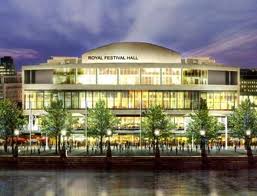
With an hour for a nice meal of lasagna, we prepared to attend an orchestra performance at Royal Festival Hall. The 10 minute bus trip and 5 minute walk brought us to the beautiful hall. Our seats were located to the side and up from the orchestra, giving us a great view of the players and the conductor. It was the Budapest Symphony visiting London and they were marvelous. The conductor nearly pounced on the orchestra with joy and leadership as he took them through Brahms Tragic Overture followed by the Lalo Symphonie Espagnole. Stunned by the technique of the violin soloists and the emotionally sturdy performing of the entire orchestra, we sat still waiting for Scheherazade.

This being one of my favorite works in the orchestral repertoire, I am quite familiar with it and, although I enjoy it every time, I am no longer emotionally changed by any performance. Yet from the first note to the last, I was on the edge of my seat in excitement. The orchestra was among the finest, if not the finest, I have heard in life, and the performance of Rimsky-Korsakov's masterpiece was incredible, powerful, and exhilarating. Extreme dynamic range, long expressive melodic lines, and rhythm without flaw charged through and the orchestra never relented in its desire to communicate the music to the audience.

The lengthy ovation at the end, in a town very accustomed to fine performances, served as a reminder there are great musicians all over the world and excellence is found everywhere, but does not happen without great exertion. The Budapest Symphony Orchestra, like all great performing ensembles, has paid the price for excellence and achieved it. There may not be absolutes in art, but there certainly are high standards that give the rest of us goals for our artistic expression.

Sunday, March 04, 2012

LP XXVIII--Windsor Castle, Health, Hillsong

Ah the London air is frigid but exhilarating, almost begs for a quick pace whether walking or running, and seems to contain an urgency of cognition and improvement. Feeling unfair to the London world if I do not comply, I find myself engaged in the process of holistic learning and the attempt for good health. Aside from the propensity for smoking found in many of the locals, the people are in excellent health. The constant walking is part of this story but so is the illegality of trans-fats and preservatives in the food. As one who struggles with bad cholesterol and potential heart disease, I am glad to know of the reduction in the trans-fats in my diet. In addition, the food does not have the constant preservatives of much of our American food. This means that everything tastes fresh and natural but does not last as long in the refrigerator. Buy it and eat it within a few days or it will not be good. Several months in London will result in better health (unless one takes up smoking I suppose) due to walking and the lack of trans-fats. Can I keep this habit in American on my return? Probably not!


Running two miles through Russell Park this morning, I reflected on our previous day's visit to Windsor Castle. Never caring that much for castles, but at the same time wanting to be supportive of my wife's desire to see one, we jumped on a bus for the hour long ride to Windsor. We arrived at the front steps and were stunned by the castle in front of us. The large, almost concentric structure included...oh no, an elderly man just ran by me going much faster than I. Suddenly humbled, I increased my speed but could not come close to his pace. Where was I in my reverie? Oh yes, the castle.


In the middle of the castle stood a large circular structure surrounded by a moat with beautiful flowers, shrubs, and well manicured grass. Making our way around the structure and through the surrounding walls, we walked into the living quarters of Windsor Castle and were treated with grandeur and opulence unlike anything previously experienced. China place settings set the standard for all dishes everywhere, gold chalices, swords and knives on the walls, tapestries inlaid with gold, ornate beautiful furniture, and royal paintings to equal that of the National Gallery. Among the treasures were rooms of...yikes, another person, this time an older lady just ran by me. I was getting tired but Londoners were passing me by as though I were crawling. Looking around I realized that everyone was in better shape.

No matter how much I run or try to get in better condition, the truth is that a lifetime of fatty, over-preserved foods and little consistent walking has made me slow and weak. Sadly, this could be true of most of us I fear. Each day I run, I am humbled by the people around me. I suppose a little humility goes a long way, but enough is enough.

Back to the castle. I was entranced by the ornate rooms with painted ceilings, the crown moldings, and the gold trim around most items. Many Van Dyke portraits adorned the walls but were paled by the original Peter Paul Rubens art that shimmered with Classical motion and Baroque shadings and power. We saw a room with a doll house, another full of Queen Elizabeth photographs, and still another with gowns and uniforms. After seeing the rooms, we visited the stunning chapel within the walls of the castle where we saw a beautiful nave and transepts. The historical castle was worth every minute of our trip and we left enriched by the experience.


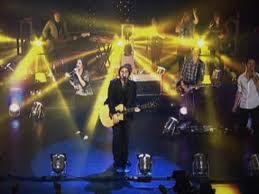
This morning we worshiped at Hillsong, located in the Dominion Theatre, home of the Queen show We Will Rock You. Filled with over 2,000 people the service was a hard rock, heart thumping, joyous time of honoring God through music and the spoken word. 3 guitars, 1 bass, 2 keyboards, a trap set, and 7 singers led the worship service that was enhanced by rotating lights, sub woofers, and an advanced sound system. We had a blast and then heard a topical sermon on walking with God by following His word. The sermon spent some time extolling the virtues of absolutes in conduct as established by Biblical law. He explored and denounced the problems of relativism as dictated by societal norms.

I found it all rather ironical considering that the music was a manifestation of the relativism that pervades our artistic world. Music, art, theatre all are sensitive to, benefit from, and respond directly to the relative changes in contemporary culture. Without that kind of progression, we have artistic stagnation. Does art in all its complexity gain from or suffer from the relativism of our world? More will need to be written on this wonderful and contentious topic. Meanwhile, off to hear the Budapest Symphony play Scheherazade.

Saturday, March 03, 2012

LP XXVII--Oxford, Wicked, the Arts

As I continue to live in this large, bustling metropolis, I become more convinced of the value of the arts in culture. In my brief London time, I will have had the joy and pleasure of attending Rock of Ages, Shrek the Musical, Billy Elliot, Stomp, We Will Rock You, Wicked, Les Miserables, Phantom, Matilda, three orchestra concerts, three recitals, two Evensong services, four art galleries, five museums, two operas, three rock concerts, and 12 plays. While some of this is due to having the resources of a city, most of it is due to a recognition of the role of the arts in society and culture.

We visited Oxford, where parts of Harry Potter took place, and learned about the 38 colleges within the city. The tour took us to the square, the chapel, the dining hall, and several of the colleges. We learned about the tutor system that is supplemented by the once a week lecture system of education. Applying strict academic rigor, thought, and cognitive application to disciplines, the system is about strengthening one discipline while being exposed to all subjects. Avoiding catering to the wealthy elite, Oxford seeks out and finds students dedicated to scholarship, to learning, to cognitive advancement, creativity, and personal development.

Nearly every church in London has a concert series that provides free music at least once a week for the surrounding community. These concerts also give musicians at all levels of training and accomplishment a venue to display their talents. Wealthy patrons frequent these events looking for that special gift to support and homeless often venture in to get warm and experience beautiful music. It is art music for the masses and everyone benefits from the constant opportunity for the musical arts. Rather than a societal anomaly, live art music is integrated within the culture of living.

The musical show Wicked, a story of how the wicked witch in Wizard of Oz came to be, is a high energy, buzzing, emotionally changing show replete with amazing lighting, staging, acting, and great pop-oriented music. Songs such as Defying Gravity, and Popular give the audience a lift as we imagine a different kind of world, a world where we dream, where we improve, where we become something better. Other songs like As Long as You're Mine and For Good are tender expressions of how the connection to others is essential to our well-being and to the completeness of our lives. Entertaining, yes. Meaningful, certainly. Wicked has something for everyone and is worth every minute of the experience. The energy of the show is intoxicating, resulting in a captivating catharsis of joy and excitement.

I took the Rock and Roll class to a club in Nottinghill to experience a live rock concert. Not knowing the venue, I was surprised to find a large, muscular bouncer checking identification and monitoring the free event. We made our way down a long staircase into a small, very dark area. Deafened immediately by recorded music with enhanced sub-woofer bass, we wandered around looking for the band. Walking up to a lady sitting in a chair, I screamed "Where is the band?" She screamed back at me, "They are on a break and will return at 9:30." I nodded my thanks since I was worried my voice was leaving me and listened for a few minutes. I soon screamed my apologies to the class and we left. It was a disappointment in many ways for I had hoped to show how rhythm and guitars are used in a live rock setting. But it was also a relief to my ears to leave the venue. So much for that experience. Not everything is positive all the time!

I am thankful for being in London, but I am especially thankful for those senses of sight, sound, touch, and emotions that allow me to love the arts, to love music, and to respect all kinds of art experiences. In a way that is difficult to define but certainly real, art--music, art, and theatre, in all its splendor makes life better for everyone. We should never relegate the arts to a lower place in curriculum, in culture, or in day to day living for it is in the arts that we make the world a better and more refined place.

Wednesday, February 29, 2012

LP XXVI--Central Methodist, Music, Plays

I apologize for my blogging delinquency. When Clairissa and Joel arrived, we took an out of town trip and had a great but exhausting experience. Upon our return to London, I realized I was behind on grading and class preparation. I think things are back to normal (whatever that means) and I can get back on my regimen of essays about London.

In a short period of time, the three Tuckers (Rob, Clairissa, and Joel) have enjoyed Lion King, the London Philharmonic, the British Museum, the Victoria and Albert Museum, St. Paul's Cathedral, a play, and lots of great food. Sunday morning we walked to Russell Square station, grabbed the Piccadilly line, changed to the Westminster line at Green Park and walked to Methodist Central Hall Westminster. Completed in 1911 as a way to honor the centenary of Charles Wesley's death, Methodist Central Hall is a large, beautiful church located across from Westminster Abbey. Walking upstairs to Central Hall we were stunned by the beautiful sanctuary that included a large pipe organ, carpet on the floor, free standing soft chairs, screens, and a bold sound system.


Immediately predicting a type of informal, social-oriented service with a nice juxtapositioning of old and new, we sat down near the back. The hour and half long service included a lengthy baptism, a long series of announcements, extended private and public prayers, and a mixture of hymns and choruses. My favorite moment occurred at the end of the service when we sang All Hail the Power with the grand pipe organ. In the middle we sang How Great Is Our God with an excellent guitar player/singer. The hyper-talent of the pianist/organist was demonstrated in his piano improvisations and his unparalleled organ playing. We later learned it was his last Sunday before going on the road playing and leading Phantom of the Opera. The warm, caring message matched the informal and rather emotion-based music.

Following the service and a nice traditional carvery of roast beef, we walked to Southbank to hear the London Philharmonic perform Hindemith, Sibelius Violin Concerto, and Rachmaninoff Dance Suite. With the Sibelius being one of my favorite works in all art music repertoire, I was entranced with the performance. Wonderful playing by the orchestra with the marvelous soloist taking center stage. In spite of my trained, critical ear, I was unable to find any mistakes in the virtually flawless performance. In addition, we had the fortune to sit behind the orchestra where we experienced the facial expressions and body language of the remarkable conductor. Great concert in all respects.

Last night we left Joel in the room and went with the group to a play called "Tis a Pity She's a W....". Published in 1633, this moral tragedy has been steeped in controversy since its first publication. The uncomfortable subject matter deals with the tragic results of incest and promiscuity. This particular performance retained the original language of the play but included contemporary music and visual idioms. We were treated to great acting, drama, sets, lighting, and sound but also exposed to rather graphic violence near the end and some suggestive scenes of inappropriate relationships. We left artistically and morally convinced, if we were not already, that incest has no place in society nor in God's plan! Maybe that is yet another role of art, to remind us of the potential darkness and results of human foibles and sins.

Today will be a quick journey to Buckingham Palace, Southbanke to get some tickets for a concert, and a trip to an art museum. Tonight we experience another rock concert and tomorrow we visit the house where George Frederick Handel lived when he composed Messiah. London is a wonderful place to be and made even better with my family by my side.

Saturday, February 18, 2012

LP XXV--Tate Modern, Rachmaninoff

The students are on a four-day break and many have taken a trip to Ireland to see the country. Trying to stay caught up with grading essays and preparing for classes, I also decided to seek out new places in London. Curious about where people shop for clothes or household items, I asked about a location. The place for inexpensive clothes is called Primark and the place for household items is called ASDA. A quick visit to Primark revealed a large department store doing high volume sales with discounts. I bought some shoes and after standing in the queue, I handed the shoes to the clerk and asked him if he were having a good day.

He looked at me in shock and paused before saying with a hesitant smile that yes he was having a good day. My question was highly unusual in a city of 12 million people and little meaningful contact with strangers. I enjoy the innocuous question and have yet to receive anything but a positive reaction from a worker. Seems to me that regardless of where you are, a smile and a friendly comment goes a long way for people. I left the store smiling at his reaction and decided to find ASDA.

A little research and I figured out which bus would get me close. The 30 minute trip took me to South London in a residential area filled with very nice grocery stores, a hardware store, a large McDonalds and ASDA. The spacious London version of Walmart was one of the most pleasant shopping experiences I have had here with reasonable prices and helpful workers. I then treated myself to some hotcakes and sausage at the neighboring McDonalds. Back on the bus and headed toward the Tate Modern art museum.

A converted plant, the Tate Modern is one of the most progressive art museums in London. Awkward shaped with many staircases, an escalator, hidden rooms, odd shaped hallways, Tate Modern is an adventure in progressive, creative artistic thinking. Each room contains a set of curious, beautiful, ugly, original, and vastly fascinating artwork. The difficulties of navigating through the museum add to the excitement and energy found in each room. Film, photography, oils, installation, sculpture, pencil, charcoal, ceramics, and every other type of visual art can be found in this amazing institution. Physically and emotionally exhausted from the experience, I crossed the Thames, got on a bus and headed home to get ready for the Rachmaninoff concert.


What a concert! The London Philharmonic Orchestra performed the Rachmaninoff Piano Concerto No. 2 and the Symphony No. 2. It was all in the Royal Festival Hall with every one of its 2900 seats occupied. The acoustics were incredible and the orchestra was the finest in my experience. With precision and expression of the highest in professionalism and musicianship, the concert was breathtaking from the beginning to the end with the 3rd movement of the symphony as the highlight. Certainly the finest concert in memory, it was an experience I will treasure forever. Rich in beauty, personal in scope, and emotional in content, every note and every phrase contained a musical magic for the audience. The lengthy applause at the end which garnered an encore, gave testament to the power of the concert for everyone present.

Tuesday, February 14, 2012

LP XXIV--Not Quite, but Almost

Margaret Thatcher remains a perplexing enigma and controversial figure in London. When I get an opportunity to have a conversation with a Londoner, I try to steer the subject toward the person's thoughts about the conservative leadership that took place during her time as Prime Minister. Nearly everybody has a strong opinion ranging from "dictator" to "brilliant" to "greatest figure in our history" to "horrible woman, almost destroyed England".

I enjoy walking the streets of London, stopping in the shops, looking around, drinking some coffee, and watching the people. Shopping is a joyful experience of simply looking without worrying about a salesperson trying to entice me to buy the item. It is illegal for shop owners to use pressure to the buyer, and if it happens, buyers are encouraged to contact the police and make a report. As a consumer, I love this law and feel completely at ease to buy or not to buy (Hamlet?) at will. As an American, how often have we felt the discomfort and even guilt at shopping with no intention to purchase? Are we, as consumers in the United States, misleading the owners and the salesperson with our deception? Perhaps so. But in a strange sort of way, I also feel a little unimportant without the attention and pressure in a store. I enjoy the anonymity of shopping completely at ease, but I, ironically, miss being valued by the salesperson.

For a Londoner who prefers the status quo, the amazing public transportation system, the free museums, the non-stop cultural experiences, the emphases on fine arts, and the amazing world of royalty, cathedrals, heritage, and knowledge, Margaret Thatcher is the enemy due to her policies of encouraging independence and individual development. An acquaintance told me that she nearly destroyed the country through competitiveness and lack of respect for unions and for the system. He said he is contented and enjoys his life and has no need for anything more.

I am glad that England has a no tolerance policy for discrimination, for bigotry, for harsh judgment against a person for his or her race, religion, creed, or any number of complexities that form the human being. With this idea, everyone is equal and safe without any fear of ugliness or rude behavior or discrimination for being different. People respect and follow the laws and recognize the penalty for breaking them. It makes for a pleasant social world and protection for all kinds of people.

Under Marget Thatcher and the Conservative government the people were encouraged to strive for more, to work hard, to be entrepreneurial, to seek out new ways to help yourself and your family. As one bus driver said to me, "When she was Prime Minister, I had a chance to improve, to grow, to become rich. But that chance is almost gone now." Conservative government utilizes policy and decentralizes power in order to empower the people, to give them tools that will allow them to reach beyond their immediate world and grow to new heights. But the process is painful, and it implies a level of discontent that may or may not exist.

In the United States, I get weary of the pushy salespeople, I get tired of the constant pressure from so many sources, I am sick of the bigotry, the discrimination, the ugliness, and the vying for power that occurs so often by so many. And yet, maybe to an extent, perhaps sadly or perhaps a byproduct of our culture, America does provide opportunity for advancement. It makes for a difficult world, a world with limited fine arts, without supported museums, without the safety of no pressuring salespeople, and a world that continues to discriminate in spite of the constant legislation against it. Sometimes it is a world, not just a winter, of discontent. But maybe ours is a world for the frontier mentality of building a new cabin and planting crops for the future, a world for the spirit of human growth and finding your own pathway.

Today in London I visited Notting Hill to see the location of the film by the same name. Hungry, I stopped in a bakery and was immediately excited to see a large loaf of San Francisco Sourdough bread. When a lady came over to help me, I pointed to the bread that I wanted and she quizzically looked at it and mentioned it was more sour than most breads. But I said I was born in San Francisco and it sounded good to me. She smiled, sliced the loaf and sent me on my way. Making my way home on the bus and then the tube, I ate the loaf with zeal. With a great deal of discipline, I did not eat the entire San Francisco Sourdough bread, but I came pretty close. Politics aside, and I continue to maintain that balance between conservative and liberal is probably the best approach, I sure do like the bread in London especially when it is titled for a city in the United States where I was born.

Sunday, February 12, 2012

LP XXIII--Bloomsbury Baptist, Snow Patrol


In spite of the misery of the cold night and no shower, with a great degree of interest we headed to Bloomsbury Baptist Church for Sunday morning worship. The large church is a 10 minute walk for us, is located near the British Museum, and is surrounded by the traditional taverns, restaurants, and businesses. In my forward Texas manner, I arrived early hoping to join the choir during the service.

Surprised by the extensive crowd outside the church, I walked to the front doors and found them locked. A nice gentleman glanced at me, let me inside, and informed me that many of the homeless were lined up to get tickets for the free lunch offered to 25 people after the service. I quickly realized two things: 1) I did not look homeless, and 2) I would not get a free lunch! When the man then asked me why I was so early, I sheepishly mentioned that I knew a little about music and would enjoy singing in the choir if I were allowed to do so. He brightened and said yes and introduced me to the choir director/organist.

I was ushered in and gathered around the piano for a rehearsal of the Introit and an anthem. The Introit was familiar, The God of Abraham Praise, but the anthem was new to me. In fact, all the hymns were unfamiliar and had a type of high church quality to them. Singable melodies with great texts and musical complexities in the accompaniments gave the music global quality with an artistic timelessness. The lack of a formal music minister, no instruments other than an organ, and extensive corporate readings and prayers made the service feel rather formal and Anglican. Yet the message emphasized social problems, Christian service and responsibility, and the role of directed emotions in dealing with immediate issues. At the conclusion of the service, many of us offered prayer concerns, some personal and others external, giving the service a kind of hybrid Methodist, Baptist, Anglican mix. In a way it felt like a classic Baptist church drawn from an older tradition. It was quite meaningful and reminded all of us to avoid the trappings of selfish motivations in our faith and, instead, to apply God's teachings in the world around us.

Knowing that an important experience in the Rock and Roll class I am teaching is to attend an actual Rock concert, it was with some personal misgivings that I encouraged and then required all in the class to go hear Snow Patrol. In James Michener's The Drifters, a marvelous tale of teenage rebellion, an adult works to understand the music of a younger generation. While at first the environment, the bass thump, the screaming, and the roar of guitars and drums felt painful, dark, confusing, and incoherent, after a time the narrator shifted and began to get it. He began to relate to the sounds, he began to feel the music, and he found the pleasure in the experience. Rather than approaching it with criticism, he suddenly understood the appeal and in the process discovered a part of himself that could express without fear of reprisal.

With this thought in mind, we jumped on a bus for the hour long trip to the amazing facility known as the 02 Arena. The 02 is a modern area with restaurants, shopping, technical marvels, The British Music Experience Museum, and the Arena. The dome-shaped building holds over 23,000 people and has been the host of sporting events and musical concerts for the last several years.


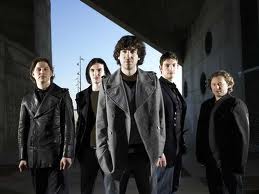
Snow Patrol, in existence for 17 years, from Ireland, is considered an alternative rock band known for the song "Chasing Cars" and "Just Say Yes." I personally enjoyed the musical content of "Crack the Shutters" and the great song "Run". The crowd of over 20,000 included all ages with nearly 10,000 of those people standing on the floor. A little concerned I would be one of the older people in the crowd, it was with great comfort that I saw many older mature ladies and gentlemen enjoying themselves at the concert. Maybe there was some hope for me after all!

Without excessive theatrics, but using solid guitar technique and full vocal range, Snow Patrol kept us entertained with pure Rock and Roll music. The incredible sound system coupled with a high energy and progressive light show enhanced the solid musical production. Nothing was extreme but it was all well-done and full of vigor from beginning to end.

Not necessarily in my training sphere as a classical musician, I must admit to enjoying myself the entire concert. I found that fun zone and I understood the appeal and, like the character in the Michener story, I relaxed and had a great time. Moving around to the beat and joining my new concert friends around me, I felt the music inside me as it generated energy throughout my being. In short, it was a blast! I was also stunned by the masses as they sang along on every song, clapped their hands, jumped around, and expressed themselves freely within the expected social constraints. I saw no criminal activity, nothing rude, and nothing out of the ordinary except for over 20,000 people having fun.

Saturday, February 11, 2012

LP XXII--Close but O So Far


Walking the footsteps of Jane Austen after visiting the shop, we encountered an unusual character dressed in an old gray coat, frilled shirt, boots, cane, and a top hat. With his long, haggard looking white side-burns and a wild eye, I was momentarily convinced that Charles Dickens had returned to say something to me. Abruptly asking him such, he quickly said he was not Charles Dickens yet he could be Martin Chuzzlewit from the book of the same name. After a strange almost incoherent conversation due to his heavy cockney accent, I revealed my Texas home. Jumping forward, he changed accents and became a Tennessee Southern fighter in the Civil War. Looking carefully at his jacket, I saw the CSA button (Confederate States of America) and we dived into a Civil War song together filled with "hurrahs" and marching footsteps. It was all very fun and terribly strange to find a man in Bath, UK who could be British and American at the drop of a note!


We were in Bath and had just completed a tour of the beautiful Abbey where over 4,000 people were buried. The organ was huge and the architecture magnificent with its multiple archways, chapels, and stunning nave built initially in 1499 by Oliver King who dreamed of angels descending on ladders to the Abbey.


Quite a structure and still used for services, the Cathedral stands as a center point in this charming city.

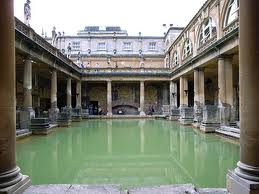
Walking about the town and seeing the apartment complex owned by John Cleese and then seeing a beautiful circus (circular townhomes around a park) where Nicholas Cage once lived, we made our way toward the famous Roman Baths built between 60-70 AD and continued development for 300 years. With great amazement at the history of the area and smiling over the artifacts that revealed a problem with theft of various items as revealed by a series of harsh curses to the thieves (not sure why anyone would ever want to steal after reading these curses), I began to imagine life as a Roman leader and, sadly, a Roman slave. An aggressive but yet ironically thoughtful society, the baths served as a natural utopia for Roman leaders and cultural development. The art is beautiful, the style impressive, the rooms organized, and the system advanced for the time period. The hot water served as a respite from the cold and as a gift from the gods to encourage cleanliness and as a fountain of youth for the Romans.

But it was not to serve as anything for us except as a reminder of our own plight, a result of not having any hot water in our place of residence. No showers for any of us in the morning and all of us now staring at water which was not to be used. Hot water for bathing, but completely unavailable to us. So we stared and we considered our situation, desperate to dive in, wanting to give in to the base need for cleanliness; but wisely using restraint against our inclinations, we resisted the urge and left the Roman Baths full of thoughts of warm water, of history, and our needs for a shower. The water was close and tempting but remained out of reach.

Home to the cold, to the lack of hot water. Yet we know it will be fixed and we will soon have hot water again and maybe, just maybe, we will be a little more appreciative of our modern world, of the conveniences we often take for granted. But mostly we will likely look better (although I must admit that my hair really does look the same with or without a shower!) and certainly our odors will be more acceptable.

Thursday, February 09, 2012

LP XXI--Jazz and The Pianist


The crypt next door to St. Martin in the Fields was converted into a cafe and dining hall and now is host to a variety of musical events including the famed jazz series on Wednesday nights. Bundling up against the chill, we got on a bus to Trafalgar Square for Jazz in the Crypt. Grabbing some food and snacks, we settled down with our chairs on the inscribed stones of people buried beneath us and enjoyed the jazz. Not exactly jazz, the band included a keyboard, bass, trombone, saxophone, guitar, and a blues singer. With a nice blend of funk, blues, soul, rock, pop, and jazz improvisation, the Delta Boys were obviously a professional, experienced group. Tight, complex rhythmic patterns, solid goal direction, and never a shaky moment gave the audience the kind of fun and entertaining experience they sought.

Looking around the room, and in spite of the large columns, and potentially creepy environment, everyone was moving to the music, and we even had some dancing happening. It made for a relaxed evening of fusion jazz with some hard driving moments, some soul feeling, and quite a lot of blues finding its way into the mix. Leaving the bodies behind, we returned on the bus filled with thoughts of the diversity of music in a city the size of London.

Relaxing a bit this morning, I got a cup of coffee, gave some laundry to be washed and folded (but I did not know that folded meant wadded up in the bag), went for a long walk, and returned invigorated by the chill in the air and sounds of people walking, cars going by, and buses working to navigate the busy streets. A delicious lunch of fish, chips, and mashed peas, and I got ready to take the Music Appreciation class to a piano recital.


We headed out for the 15 minute walk to the church called St. Pancras Parish Church and walked in about 2 minutes before the performance began. Shuann Chai entered the nave, walked over to the piano and began telling us about the recital. She explained a little about Robert Schumann, his wife Clara Weick Schumann, and Frederic Chopin. Telling us about the music, about their relationship and about Robert's difficulties with mental illness, she provided insights into the music and prepared us for the performance. She then began and we quickly recognized her remarkable abilities.

Every note, every phrase, and every rhythm was flawless but was surpassed by her beautiful expressive playing with great attention to balance, to shape, to dynamics, and to the joyous intricacies of music. Her playing was magnificent in all respects, leaving us wanting to hear more and reminding us of the pleasure of early Romantic piano music. Masterful performing, we left in awe over hearing one of the great pianists of our time.
http://www.shuannchai.com/

Wednesday, February 08, 2012

LP XX--Dark and Dingy Theatre, contrasted by the beautiful Mosque


A long trip on the tube requiring changing lines brought us to Southwark, sometimes known as theatre row due to having several theatres of various shapes and sizes in the area. In addition, there are two large boxing centers resulting in many muscular joggers on the streets. The borough seems generally seedier, darker, and a little more communally closed than other areas of London, as though an outsider has no business visiting unless he boxes and enjoys the darker side of theatre.

We walked towards Union Theatre, nearly missing it due to the small sign, and realized the location was under a bridge with a train overhead. We waited with the other audience members until we were allowed to enter the theatre of 60 seats and no real stage. The seats were small, uncomfortable, awkward and close together. Each movement resulted in a squeak of some kind and we were often afraid to move lest we disturb those around us. The place was dirty and creepy in many ways and the sound of train continued intermittently throughout the performance. As I looked around, however, I noticed every seat filled and most people dressed very nicely in suits and dresses.

When the play called King John began, most of us were not sure of the plot not could we understand the Shakespearean language being used. It made for a difficult guessing situation that had to be done based on the actions and expressions of the players as they dramatically portrayed in character. Yet as the play progressed, we began to follow the story and to get caught up in the drama, the fear, the anguish, and even the comedic moments which were few but pointed. Minimal sets, incredible acting, intense moments, and sadness pervaded the play and by the end we were both relieved and strangely inspired by the events. King John died, the countries survived, the illegitimate son received his due, the mother got her revenge, and all were changed from the emotional drama.


After some odd dreams about Kings and small, dark Theatres, we got up early for a trip to the Mosque. The wonderful and large facility contains many rooms for education, artifacts, pictures, and a beautiful prayer center. We saw some original Quran documents, models of the original Mosque, and learned the required pillars of the faith. We learned about the history, the practice, the devotion, the descriptions of languages, the commonality with Christianity, and the differences. We also witnessed a steady stream of people coming in to pray. It was a vastly educational experience and one that I prize and will continue to examine as I learn. Confident in my faith, in my Christianity, and in my world-view, I am also happy to learn other systems, to respect differences, and to discover new ideas.

Monday, February 06, 2012

LP XIX--Children and Curiosity


Our careful study and guided tour of Westminster Abbey, a tour that included chapels, rooms, walls, corners, and floors, was often supplemented by groups of children being guided by their own teachers intent to explore the monuments, tributes, windows, and caskets that are situated throughout the magnificent structure. Not that the children were ill-behaved, they were just in plenitude regardless of where we went. Such has been the case in the museums as well.

The groups are never large, 15-20 children at the most, and always dressed alike in smart uniforms with matching jackets and in most cases matching backpacks. Usually the classes are gender specific although not always. My first reaction was that these classes were from private, elite schools but a little examination reveals that all schools have a type of "private" appearance to them. The schools seem to have a veiled church-like system and a curriculum entrenched in British history and culture. In addition to the appearance of equality of the children in the group, the uniforms allow teachers to find the children quickly and the children to stay with each other. Obviously this is needed due to the crowds at each location and the non-stop energy of the children I saw. Far from perfect, they each seemed like little rockets ready to take off if given the opportunity!


At each museum or in this case the Abbey where I saw children, I secretly took a moment to be one of them by staying in the background and to listen to the teacher and to share in their experience. I tried not to be obtrusive (a little difficult being a bearded, bald Texan!) but, rather, to appear nonchalant in my spying. In every case I saw the the wiggly little students listening intently to the teacher. She would move fairly quickly through her discussion and would vary the moments of knowledge with pointed questions to the group. A child would raise his hand and respond and the teacher would affirm the child. This is the Socratic method and it still works. Questions such as what do Chaucer, Shakespeare, and Robert Browning have in common? Why are they immortalized in the Abbey?

In the art museum, the small group of students were learning about why the artist painted the scene with certain colors and with particular emphases. At the British Museum, children were seeing the Rosetta Stone and learning that there are different languages that exist around the world. Thinking a little more about our educational system and given that we in the United States do not have the thousand year history to discuss nor the richness of a city of over 13 million people, we still have much to offer. Yet it seems to me that after watching these children in a learning environment, their manners are generally more polite than our children. Granted that it is possible that I may be seeing the selected students allowed to attend.

And yet, no child that I saw interrupted another child talking nor interrupted an adult. When teachers are having to deal with impolite behavior, it detracts from the teaching. In addition, it causes a teacher to be hesitant to ask an open ended question, a question designed to encourage curiosity, a question to make children think, to explore an idea beyond the obvious, to spark the imagination, and to elicit a little academic competition. No, I do not believe London children have a better educational system, are better taught, nor are they more intelligent, but I do believe they somehow learn proper manners and polite behavior more thoroughly than do many of our children. Because of this quality, I have to wonder if they tend to embrace literature, the arts, science, and history earlier than do our children.

Knowledge, curiosity, and imagination are best fostered in an environment of mutual respect and a climate that allows for the freedom to think on another level. While we have many strengths including a robust teacher training program and schools that work hard to reach each student, my purpose is not to compare us to them, but rather to find ways to improve by drawing from other sources. We can learn from each other and we have, but perhaps we need to keep refining the idea that education is not to teach facts but rather to allow the facts to spark further possibilities. As Dr. Seuss says in Oh, The Places You Will Go!, "You'll be on your way up! You'll be seeing great sights! You'll join the high fliers who soar to high heights."

Sunday, February 05, 2012

LP XVIII--Church and Music


On this London day the ground is filled with snow, the air is cold but clear, and there is a feeling of wintry wonderment in the people. Transportation is limited today but our legs are still working for a brisk, brief walk to a nearby church. We walk to the back of St. George's Bloomsbury Anglican church but are unable to get in until we find the front steps. Built in 1731, the beautiful church uses typical archways, stonework, and a stunning wood altar as part of its architecture. Very tall with a large chandelier hanging down, the church has the kind of warm, resonant acoustics often found in stone cathedrals.

As we walk in, an energetic young man with little hair meets us at the door and tells us that the weather has prevented the organist from coming, therefore we would be singing unaccompanied. I smile at him and with a little trepidation resulting from my years of agreeing to things that I really have no business doing, I say, "I cannot play the organ, but I do play a little piano." He says "Oh, please play for us today."

We walk quickly to the grand piano in the corner, he shows me the three hymns to play and three minutes later, the service begins. I am shaking partly from the cold and mostly from the fear, but if I can serve in some small way, it is best to do so using something that I know--music. With that thinking, I thank the Lord for the honor and the opportunity to help and then I dive in praying for my fingers to work properly. The service was typically Anglican with prayers, hymns, speaking, and Communion. Far from perfect, I am adequate as a pianist and do my best. All were appreciative after the service and my heart (but not my body) warmed from the experience. Time for traditional carvery of roast beef.

A great nap after lunch and I am going for a walk in the slush. Walking by the same church, I glance over and realize a woodwind quintet is performing an afternoon recital. Quickly heading in, I sit down and listen. Outstanding ensemble with amazing technique and beautiful musical expression. They are playing the Taffanel, followed by Elliot Carter, and ending with a fun but crazy difficult piece by Paul Patterson. What a great group.

A nice light Italian dinner of peas, red peppers, mushrooms, prawns, and rice with some garlic bread and I am happy. Time to grade some papers, email some friends, and read some more Charles Dickens.