Thursday, February 09, 2012

LP XXI--Jazz and The Pianist


The crypt next door to St. Martin in the Fields was converted into a cafe and dining hall and now is host to a variety of musical events including the famed jazz series on Wednesday nights. Bundling up against the chill, we got on a bus to Trafalgar Square for Jazz in the Crypt. Grabbing some food and snacks, we settled down with our chairs on the inscribed stones of people buried beneath us and enjoyed the jazz. Not exactly jazz, the band included a keyboard, bass, trombone, saxophone, guitar, and a blues singer. With a nice blend of funk, blues, soul, rock, pop, and jazz improvisation, the Delta Boys were obviously a professional, experienced group. Tight, complex rhythmic patterns, solid goal direction, and never a shaky moment gave the audience the kind of fun and entertaining experience they sought.

Looking around the room, and in spite of the large columns, and potentially creepy environment, everyone was moving to the music, and we even had some dancing happening. It made for a relaxed evening of fusion jazz with some hard driving moments, some soul feeling, and quite a lot of blues finding its way into the mix. Leaving the bodies behind, we returned on the bus filled with thoughts of the diversity of music in a city the size of London.

Relaxing a bit this morning, I got a cup of coffee, gave some laundry to be washed and folded (but I did not know that folded meant wadded up in the bag), went for a long walk, and returned invigorated by the chill in the air and sounds of people walking, cars going by, and buses working to navigate the busy streets. A delicious lunch of fish, chips, and mashed peas, and I got ready to take the Music Appreciation class to a piano recital.


We headed out for the 15 minute walk to the church called St. Pancras Parish Church and walked in about 2 minutes before the performance began. Shuann Chai entered the nave, walked over to the piano and began telling us about the recital. She explained a little about Robert Schumann, his wife Clara Weick Schumann, and Frederic Chopin. Telling us about the music, about their relationship and about Robert's difficulties with mental illness, she provided insights into the music and prepared us for the performance. She then began and we quickly recognized her remarkable abilities.

Every note, every phrase, and every rhythm was flawless but was surpassed by her beautiful expressive playing with great attention to balance, to shape, to dynamics, and to the joyous intricacies of music. Her playing was magnificent in all respects, leaving us wanting to hear more and reminding us of the pleasure of early Romantic piano music. Masterful performing, we left in awe over hearing one of the great pianists of our time.
http://www.shuannchai.com/

Wednesday, February 08, 2012

LP XX--Dark and Dingy Theatre, contrasted by the beautiful Mosque


A long trip on the tube requiring changing lines brought us to Southwark, sometimes known as theatre row due to having several theatres of various shapes and sizes in the area. In addition, there are two large boxing centers resulting in many muscular joggers on the streets. The borough seems generally seedier, darker, and a little more communally closed than other areas of London, as though an outsider has no business visiting unless he boxes and enjoys the darker side of theatre.

We walked towards Union Theatre, nearly missing it due to the small sign, and realized the location was under a bridge with a train overhead. We waited with the other audience members until we were allowed to enter the theatre of 60 seats and no real stage. The seats were small, uncomfortable, awkward and close together. Each movement resulted in a squeak of some kind and we were often afraid to move lest we disturb those around us. The place was dirty and creepy in many ways and the sound of train continued intermittently throughout the performance. As I looked around, however, I noticed every seat filled and most people dressed very nicely in suits and dresses.

When the play called King John began, most of us were not sure of the plot not could we understand the Shakespearean language being used. It made for a difficult guessing situation that had to be done based on the actions and expressions of the players as they dramatically portrayed in character. Yet as the play progressed, we began to follow the story and to get caught up in the drama, the fear, the anguish, and even the comedic moments which were few but pointed. Minimal sets, incredible acting, intense moments, and sadness pervaded the play and by the end we were both relieved and strangely inspired by the events. King John died, the countries survived, the illegitimate son received his due, the mother got her revenge, and all were changed from the emotional drama.


After some odd dreams about Kings and small, dark Theatres, we got up early for a trip to the Mosque. The wonderful and large facility contains many rooms for education, artifacts, pictures, and a beautiful prayer center. We saw some original Quran documents, models of the original Mosque, and learned the required pillars of the faith. We learned about the history, the practice, the devotion, the descriptions of languages, the commonality with Christianity, and the differences. We also witnessed a steady stream of people coming in to pray. It was a vastly educational experience and one that I prize and will continue to examine as I learn. Confident in my faith, in my Christianity, and in my world-view, I am also happy to learn other systems, to respect differences, and to discover new ideas.

Monday, February 06, 2012

LP XIX--Children and Curiosity


Our careful study and guided tour of Westminster Abbey, a tour that included chapels, rooms, walls, corners, and floors, was often supplemented by groups of children being guided by their own teachers intent to explore the monuments, tributes, windows, and caskets that are situated throughout the magnificent structure. Not that the children were ill-behaved, they were just in plenitude regardless of where we went. Such has been the case in the museums as well.

The groups are never large, 15-20 children at the most, and always dressed alike in smart uniforms with matching jackets and in most cases matching backpacks. Usually the classes are gender specific although not always. My first reaction was that these classes were from private, elite schools but a little examination reveals that all schools have a type of "private" appearance to them. The schools seem to have a veiled church-like system and a curriculum entrenched in British history and culture. In addition to the appearance of equality of the children in the group, the uniforms allow teachers to find the children quickly and the children to stay with each other. Obviously this is needed due to the crowds at each location and the non-stop energy of the children I saw. Far from perfect, they each seemed like little rockets ready to take off if given the opportunity!


At each museum or in this case the Abbey where I saw children, I secretly took a moment to be one of them by staying in the background and to listen to the teacher and to share in their experience. I tried not to be obtrusive (a little difficult being a bearded, bald Texan!) but, rather, to appear nonchalant in my spying. In every case I saw the the wiggly little students listening intently to the teacher. She would move fairly quickly through her discussion and would vary the moments of knowledge with pointed questions to the group. A child would raise his hand and respond and the teacher would affirm the child. This is the Socratic method and it still works. Questions such as what do Chaucer, Shakespeare, and Robert Browning have in common? Why are they immortalized in the Abbey?

In the art museum, the small group of students were learning about why the artist painted the scene with certain colors and with particular emphases. At the British Museum, children were seeing the Rosetta Stone and learning that there are different languages that exist around the world. Thinking a little more about our educational system and given that we in the United States do not have the thousand year history to discuss nor the richness of a city of over 13 million people, we still have much to offer. Yet it seems to me that after watching these children in a learning environment, their manners are generally more polite than our children. Granted that it is possible that I may be seeing the selected students allowed to attend.

And yet, no child that I saw interrupted another child talking nor interrupted an adult. When teachers are having to deal with impolite behavior, it detracts from the teaching. In addition, it causes a teacher to be hesitant to ask an open ended question, a question designed to encourage curiosity, a question to make children think, to explore an idea beyond the obvious, to spark the imagination, and to elicit a little academic competition. No, I do not believe London children have a better educational system, are better taught, nor are they more intelligent, but I do believe they somehow learn proper manners and polite behavior more thoroughly than do many of our children. Because of this quality, I have to wonder if they tend to embrace literature, the arts, science, and history earlier than do our children.

Knowledge, curiosity, and imagination are best fostered in an environment of mutual respect and a climate that allows for the freedom to think on another level. While we have many strengths including a robust teacher training program and schools that work hard to reach each student, my purpose is not to compare us to them, but rather to find ways to improve by drawing from other sources. We can learn from each other and we have, but perhaps we need to keep refining the idea that education is not to teach facts but rather to allow the facts to spark further possibilities. As Dr. Seuss says in Oh, The Places You Will Go!, "You'll be on your way up! You'll be seeing great sights! You'll join the high fliers who soar to high heights."

Sunday, February 05, 2012

LP XVIII--Church and Music


On this London day the ground is filled with snow, the air is cold but clear, and there is a feeling of wintry wonderment in the people. Transportation is limited today but our legs are still working for a brisk, brief walk to a nearby church. We walk to the back of St. George's Bloomsbury Anglican church but are unable to get in until we find the front steps. Built in 1731, the beautiful church uses typical archways, stonework, and a stunning wood altar as part of its architecture. Very tall with a large chandelier hanging down, the church has the kind of warm, resonant acoustics often found in stone cathedrals.

As we walk in, an energetic young man with little hair meets us at the door and tells us that the weather has prevented the organist from coming, therefore we would be singing unaccompanied. I smile at him and with a little trepidation resulting from my years of agreeing to things that I really have no business doing, I say, "I cannot play the organ, but I do play a little piano." He says "Oh, please play for us today."

We walk quickly to the grand piano in the corner, he shows me the three hymns to play and three minutes later, the service begins. I am shaking partly from the cold and mostly from the fear, but if I can serve in some small way, it is best to do so using something that I know--music. With that thinking, I thank the Lord for the honor and the opportunity to help and then I dive in praying for my fingers to work properly. The service was typically Anglican with prayers, hymns, speaking, and Communion. Far from perfect, I am adequate as a pianist and do my best. All were appreciative after the service and my heart (but not my body) warmed from the experience. Time for traditional carvery of roast beef.

A great nap after lunch and I am going for a walk in the slush. Walking by the same church, I glance over and realize a woodwind quintet is performing an afternoon recital. Quickly heading in, I sit down and listen. Outstanding ensemble with amazing technique and beautiful musical expression. They are playing the Taffanel, followed by Elliot Carter, and ending with a fun but crazy difficult piece by Paul Patterson. What a great group.

A nice light Italian dinner of peas, red peppers, mushrooms, prawns, and rice with some garlic bread and I am happy. Time to grade some papers, email some friends, and read some more Charles Dickens.

Saturday, February 04, 2012

LP XVII--Beethoven, Snow, and People


Upon exiting the concert, an all Beethoven experience at St. Martin in the Fields, I walked out into a snow filled London world. The people were acting crazy as though they had never seen snow, and I suppose it is as unusual as it is in Texas. The buses were nearly shut down and everyone was walking very slowly (that's a first) and gingerly expressing fear of falling. Many were huddled together under awnings almost as though the falling snow would hurt them. Children and fathers were making snowballs and throwing them and the world was suddenly beautiful and strangely equal for all of us. Maybe snow is the great equalizer especially when I realized that Texans act the same way!

But as much as I enjoyed the lengthy walk from Trafalgar Square back to my domain with the beautiful snow falling on my shoulders and lightly crunching beneath my feet, my mind was full of the music of Beethoven. The concert was exquisite in sound, expression, technical accuracy, and overall artistry. The seats in the church are rather uncomfortable and since it is not designed as a concert hall, the visual aspects are weak. The orchestra is on the same level with the audience causing most of the people to see the conductor or soloist and an occasional player.

Without spending great time discussing the details of the performance, I do want to mention that it was not without flaws. These are, after all, human beings performing live and even professionals have their mishaps at times. In one instance, the 1st horn came in two measures early and created a harmony problem, and in another, the bassoon player simply played the wrong key signature note. A few pitch problems and an ensemble issue hither and yon reminded us that music is meant to be performed by and for the people, with all of our goodness and, yes, mistakes.

It mattered not, however, for the orchestra was simply incredible. A golden, shimmering sound filled the hall and Beethoven was given the opportunity to glow. The Violin Concerto was breath-taking and the soloist was virtually without imperfections in his delivery. Especially notable was the remarkable use of counterpoint and inside augmentation of the theme during his cadenza in the first movement. Being that the Beethoven Violin Concerto is one of my favorite works in the repertoire, I enjoyed the performance from beginning to end.

The 6th symphony, one of the earliest examples of programmatic music, is subtitled "Pastoral" and is a tribute to Beethoven's love of nature. The work is classical in sound (aside from the expected harmonic development) and contains great moments of simplistic expression and beauty. The piece has special meaning for me due to my father singing themes from the symphony while playing guitar. I can still see him in the living room strumming and singing a nice folk-like song that he told us was written by Beethoven. The lively and fun scherzo is followed by thunder and lightning depicting a violent storm which then gives way to the gentle rocking of the last movement as the sun comes out and the world brightens. Great piece and one that continues to live and breathe in today's culture of high energy, technology, and complexity.

On my way home from the concert, as I avoided slipping in the snow, and as I gazed with wonder at the falling flakes slowly but surely blanketing the London world of streets, sidewalks, and shops, I gave a moment of gratitude to God for the music of Beethoven, for the falling snow, and for my time in London.

LP XVI--Stonehenge, Salisbury, Books, Mercury


Short in plot, average in acting, a little dated in visuals, exciting in vocals, and incredible in band sound, We Will Rock You was a rocking, heart-pumping, pulsing tribute to the music of Queen and the remarkable talent of Freddie Mercury. We entered Dominion theatre, climbed the stairs to the balcony level and were treated to a pictorial history of Freddie Mercury up to his tragic end in 1991 from HIV. When the show began, we knew we were in for a fun night of Rock and Roll and it did not disappoint. We left with our ears ringing but our lives enriched from the experience, reminding me of the musical diversity of Queen and Freddie Mercury. Maybe I wanted more music and less dialog or maybe I missed the actual vocal ability and stage charisma of Freddie, or maybe I wanted the band to be on stage rather than hidden in the wings, but it was still a blast and left me filled with the joys of Rock and Roll.

Early the next morning, we headed out to the English countryside for a day trip. After a pleasant drive of nearly 2 hours, we saw it--Stonehenge. The years of hearing about it, seeing pictures, and suddenly the real thing was in front of me. We parked and got closer and Dr. Wyrick with his experience in Archaelogy, discussed the magnificent mystery of Stonehenge. We concluded with the likelihood of its being a time keeper to determine and predict seasons for planting and weather changes, based on the placement of shadows from the sun. The bold and pesante' structure serves as a reminder to us not to take for granted our scientific knowledge, our clocks, and our modern world. It has not always been so easy!


A twenty minute drive brought us to Old Sarum followed by Salibury Cathedral. The castle at Old Sarum no longer has the majestic walls of the past, but the moat is deep, the hill is imposing, and the past comes alive as we walked around imagining a world of power, of battles, and of life in Middle Ages. We went down the hill to the city for a lunch of sausage and mash followed by a quest for a good used bookstore. Walking, walking, but finding nothing of consequence, I happened to glance in a window and saw some beautiful old books. No sign on the door or anywhere but I rang the bell out of curiosity. An attractive elderly lady in her twilight years answered the door. I smiled my most charming smile and said, "Hello, I am from Texas and I love rare books. May I see your collection?" She welcomed me and the two students who were with me.

The word "books" is inadequate to describe this collection. Several thousand rare books of the highest quality I have seen or imagined, resting comfortably on shelves, side by side with their best friends of equal or greater worth, as though Kings and Queens dwelling peaceably together, satisfied with their heritage and their aura of nobility, knowing they have power but never abusing that responsibility, confident and maybe a little pride in their demeanor with an arrogance borne of their natural superiority. Beautiful books inlaid with gold, with plates, illustrations, flawless binding, most dating before the 19th century. An original Coverdale Bible from 1535, a book from 1712 on how to be a Gentlemen, books on the outdoors, books from Ireland, Scotland, and England. History, culture, refinement, monarchy all beckoned me to hold them, teasing me with ownership that was not mine to offer. Ranging from 300 pounds to 100,000 pounds, these marvelous crown jewels sit on their throne awaiting a new owner that may or may not ever be found.


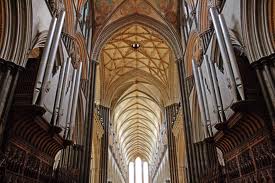
Shaking from that experience, we headed toward Salisbury Cathedral where we were given the gift of beauty and history through the blessing of entering the majestic house of God. Completed in 1258, consistent in architecture, massive in height, rich in detail, and emanating spirituality in every corner, this Cathedral is certainly one of the most beautiful and original structures of its kind as well as housing the original Magna Carta. As we walked through the nave, we learned, we prayed, we listened, and we stared in awe at the arches, the engravings, the stonework, the sculptures, the columns, and the caskets. We heard the sordid tales of murder, the enchanting stories of love, and the history behind the amazing stained glass. We saw the famous Salisbury clock, and the incredibly powerful pipe organ still used each day.


As a special bonus, I learned that Edward Tucker was the organist from 1618-1629, securing my suspicion that Tuckers have always been musical and originated from Ireland and England. Proud of my heritage (in spite of some tough years of the "no goods" back in the early 20th century!), I left the Cathedral honored by my experience and thankful to God for the Cathedrals that remind us of the infinite majesty of God's truth and God's love.

Thursday, February 02, 2012

LP XV--The Students

I think I'll take a break from the descriptions of life in London and the philosophical meanderings from the experiences to talk about the students in the program. We have a total of 19 students majoring in various fields including Geology, Music, Cross-Cultural Studies, English, Pre-Law, Communication, Education, Theater and other disciplines. 8 students attend the University of Mary Hardin-Baylor, 6 students attend Hardin-Simmons University, and 5 students attend Howard Payne University. We have 14 girls and 5 guys.

We have one former Marine with the rest of the students being Freshmen, Sophomores, and Juniors. While each student comes from a different family background, they all have some things in common including their Christianity and their eagerness to learn more about history, culture, and the arts. Some enjoy conversing on Charles Dickens, Shakespeare, and art while others prefer subjects such as history, music, and theatre. Of course there are the expected conversations of movies, cars, weapons, and sports, but for the most part our conversations deal primarily with our London experiences.

Some students are quiet, preferring a more reflective approach to what they see and learn while others are out-going and openly expressive about their views of the London world. Some enjoy the camera moment while others seem to avoid excessive photography. We have some who really enjoy cooking and finding creative ways to save money on food, and we have several who relish being out in London discovering new food and new adventures. Our living arrangements are adequate with a nice commons room for meetings and a small kitchen nearby.

They are all great people and are thankful for this opportunity to live in London for a semester, learning the culture, hearing about the monarchs, learning the history, experiencing the theatre, sharing in the moment and taking a life journey in the United Kingdom. Their individuality is special and unique but so is their willingness to put self aside for the collective whole. We live in the same hotel complex which is not fancy but is perfectly adequate for our needs.

We are here to learn, to enjoy, to see and to feel London in all its glory and splendor. There are five British teachers, two of which teach a required course called British History and Culture, a teacher of Art Appreciation, a Dickens literature teacher, and a theatre teacher. In addition to the British teachers, we have three American teachers. The classes are a combination of lecture and field-based experiences. In theatre class for example, the students hear about a particular play, then attend a performance. This is followed up with a discussion. All the teachers use this same approach of knowledge, experience, synthesis in all the classes.

Breaking out of my classical background, I am teaching a course called History of Rock and Roll. We have experienced the Queen show We Will Rock You, Hard Rock Cafe and memorabilia, and are later going to a Jazz concert demonstrating Rock's essentially blues history. We are also doing a London Rock and Roll tour, a British Music Experience gallery, and some additional shows and trips (including a stop at Liverpool).

In my Music Appreciation course, there is an unlimited amount of opportunities to hear great music from nearby recitals to major concerts. Great musicians are in multitude in London and our discussions cover the gamut of what music means in history and culture. A person can spend lots of money going to concerts and events or take advantage of the free museums and educational outlets available all around London.

One of the great benefits of this program is the opportunity to worship in a variety of settings and see many of the great Cathedrals that adorn the United Kingdom not only in London but also around the country. The students are very response and recognize the great opportunities they are having in this program. While all of us will likely become homesick for chicken fried steak and the Texas sky, we are also excited to be here.

Wednesday, February 01, 2012

LP XIV--Art and Rock


The National Gallery of London has without question some of the most stunning and beautiful artworks I have ever seen and experienced. This large institute contains the finest art in the world and currently houses the Leonardo Da Vinci exhibit. Each room was a magical presentation of great works, some by unknown artists, others by painters widely regarded as the finest of their time period. As I walked and looked and studied and experienced the art, I realized...


We walked into Hard Rock Cafe and immediately heard the BeeGees on the amazing stereo system. In the corner wall, we could see Stuart Sutcliffe's guitar. Now you may ask who is Stuart Sutcliffe? He is sometimes known as the Fifth Beatle. Part of the original group and an excellent bass player, he left to pursue a career in art but died at the age of 22. High on the wall we see Eric Clapton's guitar he gave to Hard Rock Cafe in London. In the basement is an Elton John costume and nearby is a display of the great Jimi Hendrix and his all black costume he often wore. As we ate a delicious meal, we...


that art is one of the greatest of emotional expressions of creativity. In an oil painting, the artist represents not just the natural world but also includes his/her response to the event or the setting. This causes a deeper level of emotional ownership with the work for both the artist as well as the viewer. In the eyes we see the soul, and in the body we see the heart, and in the light we see the thoughts, and in the motion we see both the future and the past. I was shaken to walk into a room and see...


heard some hard-rocking music You Give Love A Bad Name--Bon Jovi, Over My Head--Lit, Caught Up In You, .38 Special, and Crushcrushcrush, Paramore. All of it hard and heavy (maybe more than makes me comfortable, but certainly muscular rock). All around us were Gold records of Queen, Rolling Stones, Bruce Springsteen, and David Bowie. When we finished eating we went across the street to the shop and The Vault where we saw an original song by John Lennon, touched Jimmie Page's guitar, looked at Gene Simmons' Bass, grimly stared at Kurt Cobain's guitar, looked daringly (briefly--no pun intended) at Madonna's corset and undergarments, smiled at Les Paul's guitar, saw John Lennon's jacket, and wondered about Pete Townshend's guitar (famous as The Who for smashing his guitar) being intact. We left with thoughts...


art by Van Gogh, Degas, Seurat, Rousseau, and Cezanne. But it was the room of Peter Paul Rubens that nearly engulfed me in beauty. Piece after piece of incredible strength, color, line, and emotion. Each one a story of its own and each evoking strange thoughts of a world that lives in our dreams and our subconscious. A world of shocking beauty, in some cases showing innocence destroyed, yet respecting individuality, and constantly communicating powerful emotions which are so strong as to threaten to absorb the people. The absolutely flawless oil paintings capture forever an artist's craft and ability to see beyond the obvious and into the...


of Rock and Roll's vast influence on culture. At first relegated to teenagers jumping and dancing and screaming, now Rock and Roll has permeated the lives of adults of all ages. Those who loved Rock in the 50s are now mature and often retired, but still finding meaning in the music from their day and forward. We may be getting older, but we can still Rock out in joyful expression of music that is burrowed within us. And I must say that Eric Clapton is truly an impressive figure in Rock's history with a talent for altering his sound while retaining his quality and creativity. And I must admit to liking Sting, Bon Jovi, and yes Aerosmith. Tonight we go to a Queen show called, We Will Rock You. It promises to be non-stop entertainment!


depths of life with its beauty, its fears, and its hopefulness for a better world. The National Gallery is a visual treat in all respects and I consider myself blessed for my time there. And thousands visit the Gallery for more Rubens and more Raphael and more opportunity to obviate any stress by sharing with the artists the wordless thoughts that reside deep within the scope of the human soul.

Tuesday, January 31, 2012

LP XIII--Insignificant, Creative, and Entertaining


Insignificant felt I when spending several hours in the Natural History Museum, a sprawling complex deservedly devoted to animals, plants, and the non-human world. From dinosaurs to insects, I saw and experienced as much as possible in a few short hours of this amazing institution. Fascinated with insects and arachnids, I focused my attention on the thousands of species currently identified and known. Standing among the insects, walking toward the mammals, and glancing with interest at the fossils and dinosaurs, I realized how small mankind is in this complex world of nature. So as to avoid an emotional regression resulting from the realization of my unimportance as a human, I went across the street to the Victoria and Albert Museum.


Mankind's contributions are well chronicled in this comprehensive presentation of history, art, jewelry, silver, sculpture, and everything man-made throughout time. From thimble art to massive tapestry to costumes, furniture, paintings, monuments, altars, statues, and silver, this museum demonstrates human creativity with all its glory and achievement. Sitting in the Raphael room for several minutes, staring at the monumental paintings by the great artist, I felt the power and majesty of the Biblical stories portrayed in each piece. Admiration for his skill and respect for his artistic profundity does not fully express my feelings about Raphael's remarkable beauty and depth of expression he put into every work of art. His art is nearly so perfect as to be difficult to put into words.

A quick run through of the jewelry section in order to get to the Theatre and Performance area, left me breathless in awe of the diamonds, rubies, pearls, gold, and silver as they richly gleam on the necklaces, rings, bracelets, broaches, and earrings. But I made it to the performance area without excessive coveting of the items, only to see a room devoted to the marvelous Annie Lennox, known as the lead singer of the Eurythmics. She also continues to be a fine composer, philanthropist, and social activist, leading the way for raising money for charities. Continuing on, I realized, almost with a shock and an "aha" moment, that opera and rock concerts have similarities. Side by side, I saw costumes of opera stars and rock stars (Elton John) and began to read about the accompanying events. Rock music has become theatrical with plots, antics, little talking and lots of music, all to provide a visual representation of the sound. Such is true of opera. One may prefer a certain medium over another, but in many ways, the concepts are closely related, although reaching different clientèle.


I completed my human affirmation time in the Victoria and Albert Museum and felt in the mood for English fish and chips. For 6.99 British pounds, I got a great piece of battered cod with large french fries and delicious mashed peas. Lemon juice and vinegar on the fish made it jump into my mouth with joy and I topped it off with a little water. Time to rest and get ready for the play.

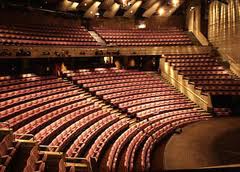
Grabbing a bus and heading toward Greenwich, we got off at Southbank and walked into the National Theatre called Olivier Theatre. Stunned by the size of the hall, I realized I had walked into one of the finest theatres I have experienced. With a capacity of nearly 2,000, a rotating stage, and flawless sightlines, this theatre maintains the highest standards of excellence in performance perhaps in the Western world.


The show was called She Stoops to Conquer. First performed in 1773, it is a favorite of Londoners and uses the old English style of delivery. The comical plot of funny personality traits and misunderstandings is about two couples ultimately getting together in spite of the challenges by family members. The title comes from the leading lady pretending to be a housemaid in order to win the attention of a wealthy Londoner. The elaborate staging with a revolving stage allowed for quick changes in the set and in the characters. Aside from the British accents and the advanced vocabulary (I hate to admit that I could have used a dictionary for some of the words!), I followed the story well and could hear everything from my balcony seat. Great acting, physical comedy, and fast-paced delivery gave the play an energetic glow all the way to the satisfactory ending.

Added to the story was a fun and creative musical score with keyboard, some strings, and percussion. All in a folk style, the music was bright, rhythmically interesting (meter changes throughout) and strong in the hall. The cast sang, danced, and seemed to enjoy the vibrant musical score. It was a superior performance in all respects.

Small in the natural world, large in the creative world, then superior in entertainment, human beings may be insignificant in many ways on this earth, but the creative energy, the spark of ingenuity and industry, the desire for personal expression that gives us art and music, sculpture and color, dreams that become reality, synthesize and meld together to secure our place in the past, in the present, and in the future.

Monday, January 30, 2012

LP XII--Tower of London, Cold


The weather suddenly changed, and it is now cold outside. We have had it easy until now with only one coat required and no gloves needed. Today and the rest of this week we wear layers of clothes, gloves, hat, and a scarf. It feels so bitter outside that I can understand why everyone was so angry at each other many years ago.

The Tower of London was founded and built by William the Conqueror in 1066. Used primarily as a prison, it was later used to house royalty, keep the armory, secure the treasury, house the Crown Jewels, imprison people, kill people, torture people, and guard against takeover. Built in concentric layers with the original White Tower as the center, the Tower of London stands today as a strong heritage of the past and a keeper of the Crown Jewels.

We learned more about Henry VIII and saw his armor as a 17 year old and then his armor at age 49. He grew in girth during that time to the point of being unable to sit astride a horse. His antics with his wives added to his already colorful reign as King and we were able to see the world of swords, jousting, Knights, armor, and, sadly, the place of beheadings.

Walking through the cold and the ravens, which seemed a bit angry and unpredictable, we headed up a very narrow, winding staircase and arrived in the Bloody Tower where Sir Walter Raleigh and his family were kept prisoners for 6 years. It was also in this same tower where the two sons of Edward IV were sleeping when they were sadly killed at the ages of 12 and 13. It is also the place where Henry VI was killed.

Our tour included a look at the armory, the cannons, the swords, the heads of the Kings, and the awful torture chamber. It was a quick run-through and no question that there is more to learn about this magnificent structure.

After a lunch of yogurt and bread, acquired from nearby grocery store, I headed toward Marble Arch to buy some clothes. Finding a large department store called Primark, I bought some things to combat the cold and returned to my room. Another productive and educational day in London. But after seeing the evidence and hearing the stories, I continue to be genuinely perplexed at the pain and suffering past leaders inflicted on others. Historically I suppose a ruler had to govern with an iron fist so as not to appear weak; and yet, I have to wonder if the methods pointed toward an inherent insecurity. Furthermore, if this is a human trait, I hope that our refinement in our culture today points us toward greater compassion.

Sunday, January 29, 2012

LP XI--All Souls Church


Jumping on a bus and sitting on the top level so as to see more of London from a higher level, we headed to All Souls Church off of Oxford St. This church demonstrates once again the resilience of the British culture as it was bombed to destruction in 1940 and rebuilt ten years later. Although smaller than many of the cathedrals in London, it retains the traditional columns and archways of most of the churches in the area. With a wraparound balcony and gold inlaid design work, the church has all the expected markings of a traditional Anglican church. And that is where the expectations end.

Somewhat shocking for an Anglican church was the carpet and cushioned individual chairs that lined the main worship center. A modern stage contained a praise band with drums, guitars, a cello, a trombone, and yes even a saxophone. The prominent organ was elevated above the band and the grand piano resided on the floor. Rather than an imposing altar, the front modern cross-shaped stand seem to demonstrate the juxtaposition of old and new. No less than 7 large screens were situated throughout the sanctuary and people were able to see in spite of the many columns supporting the balcony.

A word of history is in order. Henry VIII was upset that his wives had only given him daughters and he wished to divorce Catherine and marry Anne Boleyn. It is difficult to capsulize this complicated situation, which included murder and imprisonment, but in the end Henry was denied the right to annul his marriage. Wishing to retain the Roman Catholic ideals but the freedom from the Papacy, the Church of England was formed and defines the church today. With a strong Catholic tradition, most of the Anglican churches in London are considered High Church with chants, all male choirs, strict liturgy, and bowing to the authority of the President of the service. Beautiful, God-centered services with artistically performed music and messages pointing to the Sovereign God of the world are the practice in most Anglican Churches.

But not All Souls Church. We sang Mighty to Save, O Church of God Arise, Forever, and two hymns, all with drums, praise band, pipe organ on everything, and a choir. It was all very inclusive, informal, and partner-oriented. Decidedly anti-Catholic by decrying intercessory prayer, the service was comfortable, familiar, and similar to what I experience weekly in Texas. The 800+ congregation seemed alive with the spirit (at least as much as the culture encourages), and the church stands out as an Evangelical fellowship in the midst of mostly formal offerings.

I did notice that we Texans moved our bodies more than most of the Londoners present and I was once again pleased with the precision in singing that emanated from the congregation. Every consonant was exact and each comma resulted in an almost imperceptible pause. Adherence to the text and careful insertion of harmony gave a feeling of God's choir singing throughout the service. Maybe the church is an anomaly in London, but for me, it was the perfect way to spend a Sunday. And following the service, I again enjoyed a traditional British carvery of roast beef, potatoes, and peas.

There are many ways to worship God, but most people prefer not to worship God in many ways. For me, however, I enjoy the variety of ways to worship and felt privileged to be a part of the service at All Souls Church.

LP X--Music, Tunnels, and Cathedrals

With a free day on Friday, I decided to visit the Handel House, the Royal College of Music, and Royal Albert Hall. On the way to the Handel House, I of course got lost and ended up walking several miles. This seems to be the pattern of my stay in London and I am learning the joys of walking. I must take a minute to describe the streets. Cars, buses, and automobiles move incredibly fast and when the light is red, they keep their foot on the accelerator and the brake ready to jump. The yellow light comes before the green rather than before the red. This means they are ready to go.

Since the traffic is on the left rather than the right, pedestrians must ALWAYS look right before crossing. When the Green Man is on, it is safe to cross. If not, you take your life in your hands. If you cross when the light shows a Red Man and you get hit by a car or bus, your family will get sued for the damage to the vehicle. So the world on the streets is intense to say the least. At the same time, there is an element of safety in that we are all in the same boat. People are polite and helpful and I have not felt any degree of danger other than from the traffic.

As I walked to the Handel House which is where George Frederik Handel, famous for Messiah and Water Music, lived and died during the last half of his life, I began thinking about the night before when I attended Cosi Fan Tutte by Mozart. Being of small means in London, I chose the standing only ticket for the opera. I was allowed to lean on a velvet lined bar behind the main seating area. Royal Opera House is beautiful with ornate gold and red seats and fixtures. Small enough to hear everything yet large enough to seat many people, the hall is ideal for opera and ballet. Without dwelling unnecessarily on the event, I do want to mention the incongruities of the production. They wore today's clothes and spoke in today's idioms, replete with cell phone usage and comical humor of our current world. And yet, at the same time, the music was purely unadulterated Mozart with a full orchestra and wonderful singing on the stage. The singers were incredible and shockingly attractive. Gone are the large, weighty singers of the old days and in are the model types with great voices. Kind of intimidating to us regular folks!


Arriving at the Handel House, I was met at the door by an Asian woman with an English accent. She was quite helpful and when I asked about Jimi Hendrix she became quite lively and mentioned how he lived in the same building of George Frederik Handel. More talk of Jimi than of Handel, I left full of the paradox of the lives of the great composer Handel and the vastly influential Jimi Hendrix.

Making my way on the tube and walking several more miles, I arrived at the Royal College of Music. I was disappointed, however, with the museum of instruments: small, keyboard oriented, and not very informative except for a nice area about Mahler. On the way out of the well-known College, I stopped to listen to a rehearsal in Benjamin Britten Theatre. I was strangely pleased to hear an out of tune piano. Kind of makes things more real to know they have similar struggles to my world back in Texas.


A brief time at Royal Albert Hall which is located across the street from the Royal College of Music and I headed home. A good night's sleep and we were up early to get on a bus for The White Cliffs of Dover. A nearly two hour trip on the bus, and we exited to see the sight of the famous cliffs that guard the English Channel. We then headed up to the cliffs, walked toward the large Dover Castle, and had a stunning tour of the tunnels located under the castle that were used in WWII to treat the wounded and help soldiers and citizens escape from Nazi Germany takeover. The stories of the past came alive as I could feel the fear of the people in the tunnels working hard to help their fellow Englishmen survive.


Time was short, so we returned to the bus (quite a hike) and headed over to the grandest Cathedral I have experienced. The Canterbury Cathedral. Given to St. Augustine in 597 AD, the Cathedral stands as one of the most beautiful and important institutions in British history. With over 2000 services per year, it remains active in spite of its age and magnitude. This large, sprawling church with a stunning nave, a dark and purposeful crypt, and many adjoining rooms, has some of the most incredible stained glass work on the planet. Stories of the past are told in the windows and the floors as well as thrones, the archways, and the courtyards. After the tour where we learned of the stunning martyrdom of Thomas Beckett, we humbly bowed to the Lord in a service called Evensong. The expressive choir sang music of Herbert Howells and Edward Elgar. Powerful, sublime, yet personal, the service stands out as a highlight of the journey.


Arriving home in exhaustion, partly due to the gripping emotional experiences of the day, I turned in with thoughts of how the past shapes our future. Our lives on earth are short but our purpose and our significance can be eternal. The Archbishop of Canterbury, Thomas Beckett, lives on today and his story is told as a testament of dedication and the power of truth.

Friday, January 27, 2012

LP IX--Sadness, Joy, Perceptions

The play was called Lovesong, an elegantly produced story of a couple early in their marriage and at the end of their lives. Intertwining the events together, we were given the joys of love, the fears of problems, the trite, the depth, the powerful emotions of a gripping story, and finally the passing. On either side of the dialog were dancing between old and old, young and young, and dream-like sequences between young and old. The music was beautiful, the story enrapturing, and the acting superb. I was moved to tears as the lady ended her life in order to preserve her dignity.

We left thinking about the symbolism of the play, the sadness and the joys, but after a few minutes on the tube train, an announcement came that the line was closed due to illness of a passenger. We exited that train, took some stairs to a different line and resumed our long journey home. Discussion ensued about an illness that would shut down a train and my suspicions were later confirmed, a suicide had occurred. In deep sorrow, and after arriving home, I went on a walk with Dr. Landwer. We saw a drunk in a business suit stumbling about the streets. It provided great comical relief until I later began to reflect on the difficulties of managing the London streets under the influence of alcohol. Crossing the streets of London is dangerous in a sober condition. I found myself in prayer for the drunk man and for those who lives are filled with sadness that causes those kinds of problems.

But the next morning after a 2 mile run through Russell Square, I jumped on the tube and headed toward Acton Town to find the Asian Music Centre with a museum. One of my many responsibilities is to scout out directions and places for our plays and experiences. Needing to check on the Asian music museum but also curious about possibilities for my other class, I often travel to parts of London to see if I think the experience will be beneficial for the students.

Getting a little lost but in the general direction, I stopped at a place called Tech Music School to get directions. Walking in I was shocked to see guitars on the wall and students in line. The young fellow at the desk, with a deep voice and dark short hair was busy telling each student what room and what was expected. Getting to me, he seemed a little surprised to find a bald-headed American in front of him. I asked him about the school and the possibility of a tour. He was not open to that and seemed very busy. I mentioned to him that his voice was impressive and he reminded me of Johnny Cash as a young man. He gave me a quick smile and said that was what he did, Johnny Cash impersonations with a band. I told him that back in Texas many of us listened to Johnny Cash music. He then told me he had toured through Texas and parts of the United States singing Johnny Cash music. He was about to tour again through the United Kingdom and back to the United States.


Knocked out by this news, I told him how impressed I was with the Music Tech school and wondered about someone talking to the Rock and Roll class about the music industry. He suddenly became very helpful and we set it up. The class will now have an opportunity to see real live training of rock musicians and hear from someone in the industry at one of the largest training grounds in London. Excited about this opportunity, I still had not found the museum. I walked some more and found a dilapidated building with a sign Asian Music Centre. The locked door discouraged me, but I knocked loudly and waited. Soon a very tall young man opened the door with a perplexed look. I hesitantly asked about the museum and he smiled and said "Come in and see it."


I walked into a small but very modern looking museum filled with wonderful Asian instruments. Each one had a matching video with it showing how to play. He then showed me a fun, interactive chamber for creating Asian Music. It was all very new and vastly educational. I had hit a jackpot for the Music Appreciation class. A charming lady then found me and said she could give us a talk on Asian music. I scheduled it and realized the day was a success for Rock music and for Music Appreciation. And then the best news of the day occurred, she told me a quicker route to the nearest tube and saved me several miles of further walking!


A short rest and a small group headed to the Texas Embassy for dinner that included enchiladas, rice, and beans in old-fashioned Tex-Mex style. Ah, a moment for Texas. We then walked a short distance to St. Martin in the Fields for a concert. And what a concert it was. Brahms Requiem with a smaller orchestra and incredible choir. With a dynamic range rarely heard and emotion powerful enough to increase the pulse, the performance was exquisite in all respects. The Requiem by Johannes Brahms is one of the greatest works in the repertoire and one that never fails to move the audience. The soloists were rich in tone and vibrancy and the orchestra so well in tune, it sounded like a pipe organ. The gorgeous church was the perfect setting for the event and we left feeling emotionally changed by the experience.


We survived the streets full of buses, cars, and motorcycles and returned home unharmed. While I feel blessed to be in London, it was nice to have a Texas moment. Aside from the craziness of crossing streets which is an adventure each time, I enjoy the busy world of sounds around me. The music of London is found in the concert halls, the parks, the streets, and the people. I love the music of the world with its occasional harshness and warm beauty.

Tuesday, January 24, 2012

London VIII--Animals and Running


People here are polite and formal but the animals are not. I was running in Russell Square when a pigeon walked in front of me. Hopping over to avoid the little head-bobbing bird, I nearly stepped on another one that popped up from the bush. Frustrated with their rudeness and tired of seeing their little heads bounce up and down without stopping, I continued my run. Passing by an elderly gentleman who was staring upward, I came upon a lady and her dog.

The little dog was dressed in a cute sweater and his pointed ears gave him an alertness I found rather amusing. Smiling at the little thing and thinking about that sweater, I continued my run around the square. On the second time around, they had gone a few steps but were in a relaxed mode. The little cute dog in the sweater was not so cute this time as he stepped in front of me. His very short legs were moving quickly but his body was nearly stationary, as though he were on a treadmill that was moving very fast. It was really quite comical until I realized I must go into the grass which was slightly muddy. The mud slowed me down and made my feet wet. On another day I might have thought about little Andrew from Mary Poppins and maybe I would have attempted a conversation, but on this day he was just plain irritating. Especially annoying was that his sweater was much more attractive than my gray sweats.

Later in the day as I was walking through Hammersmith Borough, I spied a small bakery with fresh bread. Making my way in, I ordered the bread and the lady asked me if I would like butter with it. I said yes and she buttered the delicious item for me, wrapped it in a package, and said thank you. I returned the thanks, paid one pound, and left with a smile on my face, ready to eat my bread.

Continuing my walk through Hammersmith and taking delicious morsels from my bread, I suddenly felt something on my foot. A quick glance down and I realized a bird from above had mistaken my right shoe for a toilet. Disconcerted yet strangely forgiving, I continued my journey with a greater appreciation for the hat on my head. The bird could not help the unfortunate event and I was simply in the wrong place at the wrong time. A interesting day I suppose and humbling without being painful. London continues to have surprises around every corner.

London VII--Bombs and Resilience


The bombs fell for 57 days in 1940, killing over 40,000 people and damaging or destroying over 1 million homes and buildings. In an effort to cripple and demoralize Great Britain, Nazi Germany used the bombing method now called The Blitz to bring the country to its knees. But as the picture above demonstrates, the strength and beauty of the country towered greater than its enemies and stands today as a symbol of heritage, of truth, and of majestic courage. As the bombs came crashing down on London and fires ensued, brave citizens took their place on the dome of the cathedral and quenched fires as they came, thus saving the magnificent structure and instilling a sense of hope and resilience in the people. In the end London and Britain survived and Nazi Germany did not.

Our walking tour and afternoon lecture, primarily about the oldest part of London revealed other facts of this marvelous city including its Roman past, the importance of the year 1066, the Monarchy lineage with its occasional absurdity and brilliant wisdom that takes us to the elegant beauty of Queen Elizabeth, and mostly the heritage of this marvelous city that gives us beautiful art and architecture, museums and concert halls, theatres and libraries, and fish and chips!

My early breakfast of yogurt and coffee followed later by a lunch of tomato soup dictated the need for a more robust dinner last night. Heading out on a brisk walk with my colleague Dr. Landwer, we found ourselves in Chinatown. Celebrating the Chinese New Year, the area was decorated with bright red oval balls and Asian ornaments. Bakeries, restaurants, and clothing stores lined the streets and the feeling of excitement and energy permeated our thoughts. We found an excellent restaurant and I sensed the lovely but dead duck in the window asking for my attention. Ordering Hot and Sour Soup, Orange Duck, and White Rice, we patiently waited for our food and discussed Asian culture and its assimilation in London. Like most Londoners, the people in the restaurant were generally kind, polite, and fast moving, eager to please but equally set upon accomplishing their goals. I am entranced by the formal politeness of this world and am intent to retain that quality upon my return to America.

Far from being contrived, there is a sense of mutual respect for each other that I find refreshing and infectious. At first, in my selfish arrogance, I thought it was my "deanly" demeanor that caused everyone to call me sir, but I soon realized that is the pattern of the culture. Men are sirs and ladies are ma'am. Responding in kind to others, I have increased my usage of Ma'am and Sir and am personally rewarded with a sense of service and admiration for others, reminding me of the joys of humbly respecting those around us. I believe a wise man once said to do to others as you would have them do to you. More than just words, the truth of the Gospel is real in our lives.

Back to the meal of soup, duck, and rice, I left the restaurant joyful with my taste buds warmly treated to a balance of sour and sweetness, of wild and tame, of the richness of the world in one meal. Roses come with thorns, music has consonance and dissonance, and great meals often have variety in flavor, such is the case of Chinese food. We walked aggressively through London, bundled up against the cold but exhilarating chill, and returned back to our apartment complex filled with thoughts of food, of life, and of friends.

Sunday, January 22, 2012

LP VI--Church, Food, and Museum

Gathering at 10:40, we headed to Westminster Abbey. On the way there, I reflected on the previous evening's meal of fish and chips. A large piece of cod with batter surrounded by beefy looking french fries called chips. All this balanced with a small cup of absolutely delicious mashed peas. All in all a tasty and quite traditional meal, topped off with a little carbonated water. Most of the students had a gentle chocolate dessert, but I wisely felt my limit of food intake!

A quick jaunt to Holburn to take us to Green Park and onward to Westminster tube station, a very nice station with plenty of space and escalators. Almost running to avoid being late, I glanced around me at the station and standing 5 feet from me were two old friends, parents of a former student. In much shock, we hugged, had a brief conversation but had to separate to get to the church on time. It was great to see them, but being one of the teachers of this London Studies program, I needed to remain with the group.

Arriving nearly breathless from the journey, we walked into the magnificent and glorious Westminster Abbey, certainly one of the greatest and most beautiful cathedrals in the world. We were instantly transformed into humble servants in the presence of greatness. Ornate without being gaudy, filled with intricate detail but grand in scope, the cathedral is somehow moderately conservative in attitude while being boldly powerful in spirit, strongly communicating the presence of the Lord with every breath and with every step. As the service began, I was reminded that the artistry of a high Anglican service is unmatched in this modern world but is surpassed by its own sensitivity and poetic liturgy. The poignant polyphony of the music reminded each of us of the individual nature of our lives that is melodic yet necessarily congruent in its collective. We were at one with the Lord in this setting and yet were able to bring our individual offering of gratitude to the table.

The incredible choir sang Victoria and Tallis, sounding like a recording as it reverberated off the walls and high multi-arched ceiling. The warm, rich pipe organ presented a pyramid of sound with the foundational bass tones almost resonating from within the architectural structure of the Abbey. The flawless organist played a Buxtehude Praeludium at the end of the service that was difficult beyond measure but sounded effortless in its presentation. I was moved by the service, awed by the music, mesmerized by the art, and spiritually changed by the text.

Making our way out of the Abbey, four of us ate a traditional Sunday lunch of Roast Beef and potatoes at the Red Lion restaurant. Returning to our domicile for a short nap, I soon headed over to the British Museum. Stunned by the artwork, I found myself in awe over the ancient German folk art depicting allegorical works of humor and profound meaning. I then wandered down to the British section and felt a funny mixture of emotions when I studied the books. Huge, heavy books containing maps, drawings, and ancient texts. Shakespeare, Plutarch, Gibbons, and the list continues. But my heart grew heavy as I admired these great works. Will there be books in 50 years? Is the future of the book in jeopardy? Will this blog ever be printed or will it remain in cyberspace forever and soon forgotten? Is the past soon to be enveloped and assimilated into a technological future without a physical presence? Scary thoughts in a way, or maybe comforting depending on your view!

Saturday, January 21, 2012

LP V--Shows and Food

I got up early today with the teachers and students to send them off on what is called a Tube Rallye. This is a big London scavenger hunt to discover London. They will be at it all day and will bring back pictures proving their findings. After they left, I went for a mile run in the park. I started to hit two miles but changed my mind since I have several things I need to do today. Cleaning up and straightening my room, I came to the coffee shop to reflect on yesterday.

The British professor took the group on a London Walk where we saw the outside of several museums, churches, and shops. We covered much of central London and walked out on a bridge over the Thames River. It was a lengthy walk and on the cold side, resulting in lots of tired people. Returning to the Pickwick and after a brief rest, I and Dr. Landwer who is the coordinator for the program, walked over to one of the finest Italian restaurants I have experienced. Wonderful lasagna and garlic bread touched my palate gently as I ate the delicious food. I find the food in London to be tasty and varied and I have yet to have anything that was not excellent. Soups, bread, meats, and all entrees are perfectly prepared.

Thinking that the evening could not get better after one of the best meals I have had, we began our walking journey to the show Shrek the Musical. Like the students, I was not convinced it would be a good show. After all, Shrek is sort of a cartoon and more for kids in general. Our seats were in the lower balcony and once we were settled, I began to study the theatre. Gorgeous hall replete with ornate columns, balcony extensions, and charming London architecture. Not huge, the theatre was designed for optimal acoustics and excellent visuals. Aside from the very close quarters (I guess Londoners are used to being close to each other), the seats were comfortable and ideally suited for a theatre experience.

Shrek is an average plot that we have all read and heard before. Ugly guy falls in love with pretty girl and they end up together. Ho-hum. But on stage, the typical story comes alive with humor, fear, energy, terrific songs, and non-stop creativity. Each moment was sheer entertainment from the word go. Each set was wonderfully intricate and contained motion and shimmering lighting that added to the moment. The costumes were nothing less than incredible but were second to the high level professional acting.

Wild, fun songs with a blend of country, rock, folk, and hints of classical all came together to provide a musical of joy, humor, and non-stop energy. Clever text that matched the melodies and bass line to perfection reached a bouncing audience that soon had the entire theatre moving to the exalted beat. Really just a blast all the way through. Lord Farquaad was a hilarious scream with his short legs, rude quips, and hidden gay references. His personal qualities were weak partly due to being the son of one of the Seven Dwarves! Too cute to hate, the audience knew he would receive justice in the end.

Sets that included a flying and singing dragon, a bridge over fire, a castle, a mysterious cabin, and a magical forest kept the audience electrified throughout the performance. Great singing, acting, and dancing worked together for one of the great entertaining experiences I have had in years. What a joy!

Ah the fun of London. More to do, more to see, more to analyze, and more to experience. Having a great time!

Thursday, January 19, 2012

LP IV--Royal Navy

On this rainy morning in London, I am enjoying a delicious bowl of porridge with fruit topping and a wonderful cup of coffee. Nobody talks to me but all are pleasant in their individuality so I sit here in the coffee shop strangely comfortable in this marvelous city. A Haydn minuet is playing in the background and earlier we heard a movement of a Beethoven piano sonata, giving me the aesthetics I seek this morning. Classical tonality certainly has its moments and those sounds reside in our hearts hopefully demonstrating the consonance that awaits this day. We pick up 19 students from the airport this morning and bring them into the city to begin the London semester. Exciting times for them and for us.

Yesterday was again a long and glorious day as three of us headed to Greenwich to explore the new and the old, the present and the past. We entered the O2 and I was again in awe at the modern structure that has an architectural beauty all its own with massive spikes extending at an angle suspending a dome ceiling over a colossal arena and shopping mall. Quite a facility, we enjoyed a few minutes of coffee, of the Nissan electric car display, of the many shops of clothes and nice items. Studying the rock and roll timeline on the walls of the walkway, we proceed back to the tube to head to the National Maritime Museum and Royal Navy College.

Before heading into the Museum we went to the side and up a long footpath toward the observatory. Suddenly, almost without warning, the path ascended quickly and we found ourselves in a steep incline upward. Arriving several minutes later and quite breathless we looked back and saw London in all its glory. A sight to behold with the financial district rising up from the ground and gently touching the clouds as though trying to own the heavens but failing in spite of the effort. A magnificent view that left us awestruck for several minutes. A quick run through of the observatory included some information on brilliant scientist John Harrison who invented the chronometer. The observatory is supported by the Peter Harrison Foundation.

Returning to the museum, we did a quick run through seeing boats, paintings, machines, statues, and anything related to the Royal Navy. Completing that precursory walk, we headed across the busy street to the Royal Navy College where we were treated to a beautiful performance of a song by Gounod. Walking into the Painted Hall, we were stunned by the artwork on the ceiling and in the transept. Further exploration around the area where we heard a trumpet player, a clarinet player, and a string quartet practicing eventually took us to another small museum of art work and uniforms from many years past in the Royal Navy.

Exhausted from walking but hungry, we stopped at delicious hamburger place and then headed back to Pickwick Hall by way of the tube. The masses of people on the tube once again made me uncomfortable particularly if I thought about my Texas home on 13 acres, but I dealt with it and got back efficiently and safely. All in all a grand day of exploring and learning.

I love the politeness of the people but am disturbed by the excessive smoking. There might be smaller people here due to all the walking, but there certainly are many more smokers. Consequently, we often hear coughing and hacking around us. It is unfortunate that the education needed to encourage non-smoking is lacking in this country. Perhaps time will dictate the benefits of a smoke-free lifestyle.

Tuesday, January 17, 2012

LP III--Rock Out

Jumping and screaming as the glitter and shiny streamers fell upon us, and as we enthusiastically cheered for the amazing performers on stage, I was caught up in the maelstrom of the energy. It was the show Rock of Ages featuring music and styles from the 80s, including Foreigner, Journey, Stevie Nicks, Styx, Twisted Sister, Bon Jovi, and several others. The show was a voltage burning, head banging blast, constantly making fun of the time period while acknowledging the cultural significance. Very loud music, several inappropriate actions, and foul language were somewhat mentally displaced as the muscular bass and pulsing drums pounded out the beat and supported the incredible singers on the stage. All of it very fun but also strangely profound as the two lead singers eventually gave up on their original dreams, found each other, and launched a new dream of raising a family.

That was last night in London. This morning was another very long and intense walk that took me to the British Library and a few moments on a short block of music stores. Disappointment accompanied my thoughts when I walked into a book store laden full of Rock music books and memorabilia only to discover it was primarily an adult store and very inappropriate. Why can we not enjoy rock music without the garbage that sometimes trails along? Great question and one I hope to answer in the next few months.

In my observations, I noticed a significant lack of facial hair from most of the men except for a few college aged students. I also noticed smaller people in general both in height and in girth. This is probably due to the walking by the people or perhaps the type of food that is offered. Not entirely sure though. Maybe I see less make-up from the ladies and fewer formal dressers in my walks around London and maybe I see people whose lives seem goal-directed and not quite as happy. But again, I am not convinced this is true and time will determine such sweeping generalities.

I did walk into a coffee shop while holding a Starbucks coffee cup and asked the whereabouts of of a vintage record shop in the area. The proprietor quickly and almost harshly glanced at me and said he did not know. I proceeded to repeat my question to the other workers and to the people around me and received the same abrupt response. On my way out, the proprietor said something that sounded like a growl and to leave the Starbucks coffee outside! Smiling, I reminded myself that Starbucks is primarily American and probably a little threatening to the small London coffee shops. I need to improve my sensitivity.

In spite of very sore feet, tired legs, lack of sleep (I can't seem to get the time change under control), and being lost half the time I am walking about, I am having a grand time learning the city, learning the culture, and experiencing one of the greatest cities in the world. This morning I went to a pancake coffee house only to discover there were no pancakes. They were referencing thin crepes filled with eggs, cheese, and ham. Delicious but not the pancakes I sought. He asked if I would like maple syrup and I said yes and received a very small cup with enough maple syrup for a flea. Where do I find big, fluffy pancakes slathered in butter and dripping with syrup? Probably not until late April when I return to Texas!